It's over. Election Day has come and gone, and Barack Obama has been reelected to a second term as President of the United States. It seems like the campaigns have been going on forever, and in one night, it all came to an end.
Now it is time to move forward.
Yes, I know many people are disappointed about the outcome, and they have made it very clear that they do not think Obama was the right choice. It is scary to think about how the bitter battles between candidates in all states will ultimately effect how well everyone works together to handle the upcoming challenges for America. It is a bit disconcerting to know that this country is so divided, with almost half the country voting against the incumbent. It appears that little has changed in the last four, eight, twelve years. We are still so polarized in our political beliefs and opinions.
And yet both candidates have voiced the need for unity and bipartisanship to help the country fully recover and achieve economic growth. Change and improvement is not possible without collaboration between parties, but everyone seems to have their own agenda. And many who are angry about Romney's loss could bring that animosity to the table during House and Senate meetings, preventing any positive results.
Regardless of the winner, our country would still be facing this fiscal cliff, we would still be dealing with high unemployment and a slow economic recovery. Now it is time to toss our biased views aside and work together for the greater good of the country. The fact that both sides can be so stubborn and uncompromising is the reason we are in the position we are in. As a close friend of mine said, we dig our heels in and refuse to budge, and then we're surprised when things go to hell. Americans want results and right now, that fiscal cliff is looming in the distance. Congress needs to get its act together, adopt a true bipartisan strategy and tackle this challenge.
The question still remains, however, of whether or not people will actually live up to the bipartisan image they touted during the election, or if they will go right back to their old ways and not work across the aisle for the greater good of the country?
I am hopeful that things will get better, even though I am nervous about the fast-approaching issues. For those who have given up hope and want to abandon the U.S.--if just for a little while--there are options. (I'm thinking Jamaica, Turks & Caicos or the Bahamas.) If any of you signed up for JetBlue's "Election Protection" giveaway and voted for Romney, I hope you win and enjoy your temporary trip out of the country. (At least I hope it's temporary, I wouldn't want a mass exodus from the U.S.)
Wednesday, November 7, 2012


Monday, November 5, 2012
Contribute to Sandy Relief
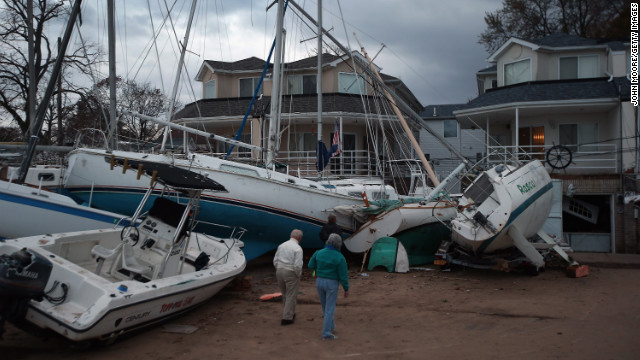 |
| A marina on Staten Island. Credit: CNN |
For many in disaster areas whose losses are not covered by insurance, the best option is to apply for assistance from the Federal Emergency Management Agency. People who cannot live in their homes are eligible for housing needs assistance, like hotel or rent money. The agency will also offer assistance for home repairs, cleanup costs and medical expenses related to the hurricane.
On Saturday night, about 12,800 people stayed in 200 shelters, the Red Cross reported. The group has served over 481,000 meals and snacks to people in need, and provided more than 12,000 health services and emotional support.
But there is still so much that needs to be done. And many Americans from across the country are wondering how they can help. Apart from traveling however many miles to New York, Connecticut, New Jersey, or any of the other devastated states, there are a few other ways people can lend a hand.
First, you can donate to the Red Cross, either by visiting the website or calling the help line. You can also text "Redcross" to 90999 to give a $10 donation. Blood supply is also low, so anyone in the surrounding areas who is eligible to give blood should try to make an appointment.
The Feeding America network delivered rtuckloads of food, water and supplies to communities in need, and its food banks set up additional emergency distribution sites, which are always looking for more volunteers and donations.
The Salvation Army set up feeding units and shelters in disaster zones. You can help in their efforts by visiting their website and provide clothes, food and beds to the displaced. You can also donate $10 by texting "Storm" to 80888.
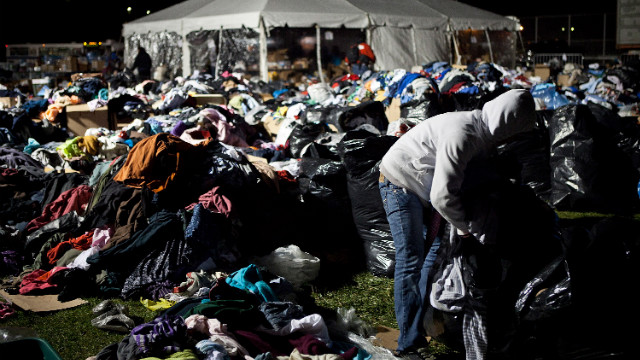 |
| Relief Center in Midland Beach. Credit: CNN |
Hundreds of businesses, media outlets, celebrities and big-name corporations have also made an effort to help. On Friday night, NBC held a telethon called "Hurricane Sandy: Coming Together," whcih raised close to $23 million for victims. The one hour event was hosted by Matt Lauer and headlined by Christina Aguilera and Bruce Springsteen. It generated a record number of donations by phone, text and online for the Red Cross. Time Warner and CBS each donated $1 million. The money will be put towards shelter, food, emotional support and other assistance.
Any contribution helps the cause to help rebuild the East Coast and get people back to their homes, their families and their lives.
Sunday, November 4, 2012
Let's Ride...100 Miles
Propelling along the pavement, a heavy headwind slowing progress, muscles pumping ever furiously to accelerate, to keep going, to reach that final goal.
I imagine this is what it must feel like to ride 100 miles timed, no less--a feat I have never attempted, and certainly have no desire to do. But for many, century rides are a welcome challenge, the true test of physical strength and endurance and the epitome of exhilaration.
Century rides are bike rides of 100 miles or more within 12 hours. It is unknown when exactly these races began, but long-distance races have been going on for what seems like forever. Cycling has been around for centuries, mostly as a means of transportation before the invention of cars. Bikes were a replacement for horses--though I think I would have preferred a horse. It wasn't until the 1860s that cycling became an official sport. It began with a short race between major landmarks, and then grew to longer races between cities, mostly in European countries. The trend crossed the pond to the U.S., where cycling became an immensely popular sport.
The League of American Bicyclists--orignally Wheelmen--began in 1880 and became the leading organization for cyclists in the U.S. It thrived for years, especially with the advent of the chain-driven safety bike in the 1890s. But soon amateur racing fell off with the rise of professionals, and the league dissolved in the early 1900s. It wasn't until the Great Depression when it was revived, but it went into decline again after WWII. Finally, in 1965, the league reorganized for good. It mostly existed as a social organization, holding annual rallies with mapped routes. In 1994, it changed its name to the League of American Bicyclists, to appease the female members, and slowly became more focused on advocacy and is now the voice for cyclists at the national level.
Under this sanctioning body, a number of bicycling coalitions now operate, providing education, social gatherings, organized rides and official races for amateur bikers. It is through these groups that many of the best century rides can be found.
There are hundreds of century rides across the country--and around the world--one could not possibly pick the best, or even the top 10. But I found a few that I think sound either super challenging or super fun.
While physically, I am more of a runner than a biker, many of these races make me reconsider hopping back on that bike and getting in gear. If for no other reason than to experience some incredible sites of our great country. There are so many places I have never visited, and to see them from the vantage point of a bike would certainly be a memorable experience. I would definitely have to train for a long time before attempting one of these, even the shorter rides, but part of me thinks I would be up for the challenge. Who wants to join me on the ride of the century?
 |
| Riding the Rockies |
Century rides are bike rides of 100 miles or more within 12 hours. It is unknown when exactly these races began, but long-distance races have been going on for what seems like forever. Cycling has been around for centuries, mostly as a means of transportation before the invention of cars. Bikes were a replacement for horses--though I think I would have preferred a horse. It wasn't until the 1860s that cycling became an official sport. It began with a short race between major landmarks, and then grew to longer races between cities, mostly in European countries. The trend crossed the pond to the U.S., where cycling became an immensely popular sport.
The League of American Bicyclists--orignally Wheelmen--began in 1880 and became the leading organization for cyclists in the U.S. It thrived for years, especially with the advent of the chain-driven safety bike in the 1890s. But soon amateur racing fell off with the rise of professionals, and the league dissolved in the early 1900s. It wasn't until the Great Depression when it was revived, but it went into decline again after WWII. Finally, in 1965, the league reorganized for good. It mostly existed as a social organization, holding annual rallies with mapped routes. In 1994, it changed its name to the League of American Bicyclists, to appease the female members, and slowly became more focused on advocacy and is now the voice for cyclists at the national level.
Under this sanctioning body, a number of bicycling coalitions now operate, providing education, social gatherings, organized rides and official races for amateur bikers. It is through these groups that many of the best century rides can be found.
 |
| RAMROD. Seattle Times |
- Ride Around Mt. Rainier in One Day (RAMROD) is a 154-mile ride around one of Washington State's most famous natural national icons. Riders can enjoy the scenery of the mountain and the park while climbing nearly 10,000 feet of elevation in two mountain passes.
- The Seattle to Portland Bicycle Classic is a one- and two-day ride and considered one of the 10 biggest recreational races in the country. It is approximately 202 miles, and most riders finish in two days, but some get it done in one, if you're up to the challenge.
- The Tour of the Scioto River Valley, better known as TOSRV, started back in 1962 as a father-son outing before becoming one of the biggest touring weekends in the U.S. It begins in Columbus, Ohio, on Saturday and riders spend the night in Portsmouth and return to Columbus on Sunday, for a total of 210 miles.
- Escape New York starts in Manhattan and crosses the Hudson River and leaves the city to explore other regions of New York. Riders can choose to go 25, 50, 65 or 100 miles along some of the best roads of the West Hudson Highlands.
- Chile Pepper Challenge in El Paso, TX is a 100-mile ride that tours Mesilla Valley. It starts and ends at La Vina Winery--post race wine party, anyone??
- Santa Barbara Century runs along the Pacific Ocean. It is a super challenging, 9,600-foot elevated ride of 100 miles. Luckily, beautiful views will make it worth the effort.
- Savage Century takes place in Newark, Delaware, and spans three states--Delaware, Maryland and Pennsylvania. It is a bit of a hilly ride, with three that have an average grades of 8%.
- Ride Westcliffe is one of the most difficult century rides in Colorado, but also one of the most thrilling. It runs from Westcliffe to Colorado City via the Frontiers Pathways Scenic Byway.
- Hot Doggett 100 takes place in Mars Hill, North Carolina, and takes riders through the mountains of Madison County with 9,600 feet of climbing. For less of a challenge, there's the Devil's Fork Metric, a 100k or 60-mile ride.
- Red Poppy Ride is held in conjunction with the Georgetown Red Poppy Festival in Texas. It runs through scenic Eastern Williamson County. Not only do riders enjoy a pleasant spring race through country roads, they also get an impressive jersey designed with the flowers the ride is named for.
- Old Kentucky Home Tour (OKHT) is a two-day ride through the rolling hills of rural Kentucky. You have the option of a 55-mile, 72-mile or 102-mile ride, but not matter what distance you ride, all are encouraged to bring cookies for the famed "cookie stop."
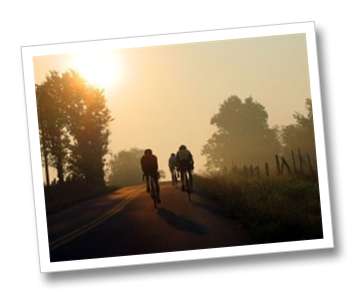 |
| Old Kentucky Home |
Friday, November 2, 2012
A Journey to the Promise Land
Along the Eastern shore of the Mediterranean lies the State of Israel, the world’s only Jewish majority state. Israel has been the subject of much controversy over the years, as it is widely considered an enemy to many countries in the Middle East, in particular Palestine. Turmoil in the region tied to the Iraq war, Syrian terrorism and Egyptian uprisings, have left a cloud of insecurity, uncertainty and fear, deterring many from visiting the Middle East. While most of those concerns are warranted, Israel has been deemed a safe state, and welcomes tourists from all regions.
It’s a good thing, too, because Israel has a lot to offer. It is said to be one of the most advanced countries in the Middle East as far as economics, industrial development and finance. Not only is it a modern cultural hotspot, but Israel also boasts a number of archaeological and historical sites, unique geography and religious venues, not to mention a wealth of museums.
 |
| Dead Sea |
Surrounding the Dead Sea is a collection of hotels, hostels and houses, restaurants and shopping areas. There are also companies that offer activities like jeep and bike tours, camel tours and rappelling. The sea's edge is dotted with springs and abundant plant life, as well as a desert landscape that offers breathtaking scenery. Some important historical sites can also be found in this region, including the Massada Fortress, ancient Ein Gedi and the Qumran cave, where the Dead Sea Scrolls were dsicovered.
 |
| View from Mt. Zion |
Tel Aviv is the second largest city in Israel and is referred to as "the city that never stops." It is the economic and cultural center of the country, offering a lively, entertaining atmosphere with festivals and nightclubs that draw people out to the streets until the wee hours of the morning. Apart from an active nightlife, Tel Aviv features dozens of daytime attractions, including 20 museums such as the Land of Israel Museum and the Tel Aviv Art Museum. The city hosts the Israel Philharmonic Orchestra and the Israeli Opera Company, and most of the national dance and theater companies are situated in Tel Aviv.
Tel Aviv's has a wonderful shopping scene, too, with bustling street markets and modern malls. Its markets are truly exquisite, displaying a variety of local fare that reflects the locals behind the whole operation. The best known open-air market is Carmel Market, located near the Neveh Zedek quarter, which offers a wide array of fresh produce and ingredients. It's perfect if you have a kitchen where you can prepare a nice meal. If not, it's also a great place to grab some picnic fixings or snacks to munch on as you tour the rest of the city. If you're looking to make a deal on your purchases, head over to Jaffa Flea Market, where bargaining is the name of the game. But be warned, vendors do this for a living, and they have this down to a science.
While you can see original crafts and pieces of art at markets, it's a bonus to see them actually being made in front of your eyes. For this special treat, venture over to Shuk Ha'aliyah, where craftspeople can be seen at work making metal pieces and furniture.
 |
| Tel Aviv |
I guess it should be no surprise--especially considering its biblical ties--that Israel has an impressive collection of vineyards and a booming wine industry. The Bible includes dozens of verses referencing planting vineyards, producing wine and blessing the wonderful fruit of the vine. God be praised for wine! Unfortunately, I've never tasted any varieties from the region, but I'm certainly open to it. I mean, if it was good enough for Jesus and his disciples, it's good enough for me. Today, the vineyars supplying grapes for production are planted on sites from biblical and later periods. More than two hundred wineries currently operate in Israel, and wine tourism has become common, focusing on visiting wineries and surrounding areas. Many places have opened wine routes attracting tourists and wine lovers from all over the world. Some possible vineyards to check out include Zohar Winery, Bazelet Hagolan Winery, Stren Winery and Golan Heights Winery, to name a few.
While we're on the subject of wine, I should also mention Israel's thriving olive business. The image of the dove carrying an olive branch is an historical symbol in Jewish culture, and the olive tree plays an important role in Israel's culture. Olive oil is one of the most important agricultural elements for the country, used for food, light, heat, medical treatments and cleaning and hygiene. The olive harvest season is very important to the people of Israel. Olive festivals are held to mark the season, and families make trips to the groves to harvest olives and watch them being pressed. If you happen to be visiting during the season, you're in luck, because tourists are encouraged to take part in the events and participate in harvests.
 |
| Haifa |
You should definitely try to check out the Sea of Galilee and a place called the Cove of the Sower, a stretch of undisturbed beach on the northern shore. This area was the site of many events of Jesus' Galilee ministry.
I feel like I could go on forever about everything Israel offers, because what I've written so far does not even begin to do it justice. The solution, I suppose, is to actually visit this magical place. And one day I will. (My parents are actually there as we speak...but unfortunately I could not tag along...I have a job, after all.) I'm sure they will come back with some incredible stories, pictures and memories--and gifts--which will only make me want to visit even more. One day, I'll make it there.
Monday, October 22, 2012
Flying Home at a Much Higher Cost
Good News! Airfares are increasing at a much slower rate this year compared to last year! What's even better, analysts said prices will rise even less in 2013.
The bad news? Airfares in the last two months of the year are set to soar...just as I'm booking my flights home for Christmas. Wonderful!
Experts in the travel industry said the average domestic fare in September was $375.35. So just imagine what that will be in Nov. and Dec. when everyone is traveling for the holidays. I'm guessing that unless I get really lucky and book at just the right moment, I'm probably going to end up paying over $300 for my flight to Denver, give or take a few bucks depending on which days and times I choose to fly. (That will largely depend on my available time off from work...oh how I wish I had unlimited vacation time.) What makes that high price tag even more likely is the fact the Southwest--known for its lower prices, just raised its domestic fares last week between 44 and $10 per round trip...and all major airlines matched the hike. Oh, how I despise the influence of Southwest sometimes.
Who knows if another hike will take place before the end of the year--I'm keeping my fingers crossed --but either way, the next week or two will be spent thoroughly searching and comparing for the best price. I just hope there are seats available...yet another problem facing holiday travelers...high demand and fewer flight options.
I absolutely love the holidays, and I cannot wait for Thanksgiving and Christmas with my family. But this is the one downfall of the season. Airlines taking advantage of travelers as they try to spend time with their loved ones.
The bad news? Airfares in the last two months of the year are set to soar...just as I'm booking my flights home for Christmas. Wonderful!
Experts in the travel industry said the average domestic fare in September was $375.35. So just imagine what that will be in Nov. and Dec. when everyone is traveling for the holidays. I'm guessing that unless I get really lucky and book at just the right moment, I'm probably going to end up paying over $300 for my flight to Denver, give or take a few bucks depending on which days and times I choose to fly. (That will largely depend on my available time off from work...oh how I wish I had unlimited vacation time.) What makes that high price tag even more likely is the fact the Southwest--known for its lower prices, just raised its domestic fares last week between 44 and $10 per round trip...and all major airlines matched the hike. Oh, how I despise the influence of Southwest sometimes.
Who knows if another hike will take place before the end of the year--I'm keeping my fingers crossed --but either way, the next week or two will be spent thoroughly searching and comparing for the best price. I just hope there are seats available...yet another problem facing holiday travelers...high demand and fewer flight options.
I absolutely love the holidays, and I cannot wait for Thanksgiving and Christmas with my family. But this is the one downfall of the season. Airlines taking advantage of travelers as they try to spend time with their loved ones.
Sunday, September 16, 2012
Take an Active Vacation
On Friday evening, I had the opportunity to help out at an event for VBT Bicycling and Walking Vacations, recently named the No. 3 tour operator in the world by Travel & Leisure. The company has been around since 1971, when a Middlebury college professor became the provider of America's first ever organized biking tours. Located in Bristol, Vermont, VBT has grown to become a global travel company, with a family that spans across five continents.
 At the event, I met owners Gregg and Caroline Marston, who greeted everyone as they entered the room. And most guests knew exactly who they were, either because they recognized their pictures from the website or travel guide, or because they had gone on an actual trip with them. I also met a couple of the seasoned travelers who have done numerous biking and hiking tours with VBT, and one man who participated in nearly 20 trips--the most of anyone else in the room. It was certainly an interesting crowd, but all of them were avid bikers and walkers with a love for travel and experiencing dynamic areas around the world. Many had met on tours together, a true bonding experience for any group, no matter their backgrounds.
And all of them had nothing but praise for the company, a rarity in the hospitality and tour industry.
So what makes VBT different? It's the personal touch they bring to each trip, making a group tour feel anything but mass-produced. It's about the individual experience, and each itinerary feels personalized. The website reads: "It starts with our seasoned trip planners, who carefully design unique itineraries in the world’s most interesting places. They work with our Trip Leaders to map out the most scenic and exhilarating routes. Then, they leverage our long-term group buying power with suppliers around the world, securing wonderful lodgings in top quality hotels where charm and character are complemented by comfort and convenience. Our air specialists do the same, working with major carriers to provide the best flight options at prices you could never match on your own."
 During the event, Gregg and Caroline talked about all the new tours they were offering, as well as their foray into nordic ski trips. All the images, the stories, the destinations and the bonds made me want to book a trip right then and there. The first problem, though, is that I'm not much of a biker, so I would have to choose one of the walking tours. Of those, I would definitely sign up for the Amalfi Coast & Capri tour or the Italian Lakes. However, the Peru tour is certainly tempting, and since I've never been to South America, I might have to pick this tour first.
As much as I would love to go on one of these trips, it's not quite in my budget right now, despite the prices being incredibly reasonable for what you get. But maybe I can reach out to my new friends and negotiate a discount...they are a great connection to have, after all. But I'll most likely stay in touch because of how amazingly friendly and outgoing they are, and those are the kinds of people who know how to run a successful tour company.

And all of them had nothing but praise for the company, a rarity in the hospitality and tour industry.
So what makes VBT different? It's the personal touch they bring to each trip, making a group tour feel anything but mass-produced. It's about the individual experience, and each itinerary feels personalized. The website reads: "It starts with our seasoned trip planners, who carefully design unique itineraries in the world’s most interesting places. They work with our Trip Leaders to map out the most scenic and exhilarating routes. Then, they leverage our long-term group buying power with suppliers around the world, securing wonderful lodgings in top quality hotels where charm and character are complemented by comfort and convenience. Our air specialists do the same, working with major carriers to provide the best flight options at prices you could never match on your own."

As much as I would love to go on one of these trips, it's not quite in my budget right now, despite the prices being incredibly reasonable for what you get. But maybe I can reach out to my new friends and negotiate a discount...they are a great connection to have, after all. But I'll most likely stay in touch because of how amazingly friendly and outgoing they are, and those are the kinds of people who know how to run a successful tour company.
Wednesday, August 29, 2012
Let's Get Muddy
As you may recall, I wrote a prevoius post about fun runs to do around the country. For the most part, those were basic races, with a couple interesting aspects thrown in. However, there has been an uptick in the number of people traveling to compete in obstacle-course events, also known as mud runs.
 I am participating in one such event, called the Hell Run, over Labor Day weekend. It's called the Hell Run--"the most kick-ass mud run on earth!" It includes 3.15 miles of mud pits and insae obstacles like a barbed wire buncker, a rope wall, fire jumps, and a metal graveyard. And what awaits me at the end of this most outrageous of physical activities? A rock concet, beer and thousands of other mud covered participants all geared up and ready for another run!
 So what is the appeal of these mud runs--other than the sheer joy of getting doused from head to toe in mud? They can be grueling, intense and definitely dirty, and yet strangely fun and addictive. These runs are essentially military-style obstacle courses, with an element of showiness thrown in, making them perfect for people who like to show off--in both a humorous and serious manner.
While my mud run is meant to be entertaining--costumes are encouraged--others are much more difficult, designed to challenge extreme fitness enthusiasts. Overall, though, mud runs are meant to be enjoyable, while still testing the physical strength and stamina of participants.
 Tough Mudder, one of the top three mud runs in the country, is probably the most diffcult. The events are hardcore 10-12 mile obstacle courses that were designed by British Special Forces. Some obstacles include things like the Arctic Enema, a swim through ice; the Electric Eel, where people slide under live wires; the ball shrinker, where mudders cross a body of water with one rope overhead and one rope below to walk on; trench warfare, a crawl through narrow muddy trenches; and the gauntlet, where mudders get high pressure hosed from both sides as they climb a steep incline. Sounds crazy, right?
The greatest part about these races is that they aren't really races at all. Sure, there's a start and a finish, but it's not about being the first to cross the line, it's about conquering the course...with teammates by your side. That's right. This is not an individual event. The Tough Mudder asks runners to pledge to put teamwork and camaraderie ahead of their course time.
 Warrior Dash and Spartan Race are two other popular obstacle courses. Warrior Dash was created by Chicago-based company Red Frog Events, and includes plank walks, bruch crawls, cargo nets and steep walls. It's a shorter course, usually only 3 miles, and most people finish within an hour. This event is basically a big party, kind of like Hell Run, with live bands and beer and free food.
On the other hand, Spartan Race is not for the faint of heart. It is an obstacle course that pushes contestants to their physical limits, and then throws fire, mud and water at them...pretty much Hell on Earth. The organizers never give racers advance warning about what they will encounter, only that there will be obstacles that catch them off guard.
For most people, these runs are about accomplishing something they never thought they would ever or could ever do. People say it makes them feel like a kid again, it's fun and entertaining, and different, to say the least. As someone who likes standard runs, I am looking forward to stepping out of my comfort zone. I know I can run a fast mile...but what about a mile through mud, over fire, under wires? If I can get through this...I can get through anything! (Or at least that's the kind of mentality these mud runs hope to engender in runners.)
I'll report back...


While my mud run is meant to be entertaining--costumes are encouraged--others are much more difficult, designed to challenge extreme fitness enthusiasts. Overall, though, mud runs are meant to be enjoyable, while still testing the physical strength and stamina of participants.

The greatest part about these races is that they aren't really races at all. Sure, there's a start and a finish, but it's not about being the first to cross the line, it's about conquering the course...with teammates by your side. That's right. This is not an individual event. The Tough Mudder asks runners to pledge to put teamwork and camaraderie ahead of their course time.

On the other hand, Spartan Race is not for the faint of heart. It is an obstacle course that pushes contestants to their physical limits, and then throws fire, mud and water at them...pretty much Hell on Earth. The organizers never give racers advance warning about what they will encounter, only that there will be obstacles that catch them off guard.
For most people, these runs are about accomplishing something they never thought they would ever or could ever do. People say it makes them feel like a kid again, it's fun and entertaining, and different, to say the least. As someone who likes standard runs, I am looking forward to stepping out of my comfort zone. I know I can run a fast mile...but what about a mile through mud, over fire, under wires? If I can get through this...I can get through anything! (Or at least that's the kind of mentality these mud runs hope to engender in runners.)
I'll report back...
Subscribe to:
Posts (Atom)