Pages

Showing posts with label Escape. Show all posts

Thursday, January 10, 2013

Building a Tree House

Tree houses are a wonderful childhood past time; fulfilling fantasies of the young for generations.

But believe it or not, they have roots in the ancient world, too. For surely people have been climbing trees for hundreds, even thousands, of years.

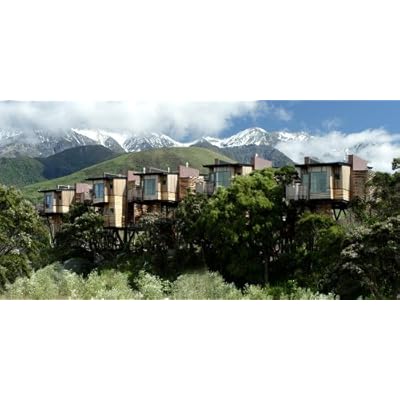
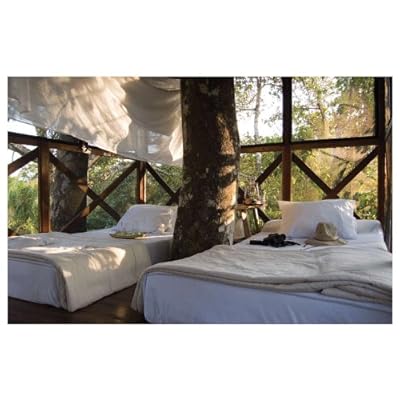
Today, there are a vast array of immaculately built treehouses all over the world, taking forms of all kinds. Some are created for a specific purpose, while others simply display the human imagination, and still others showcase the perfect synergy of these structures with nature. While tree houses have evolved over the years, their purpose remains the same: offering people the chance to view the world from a different angle.

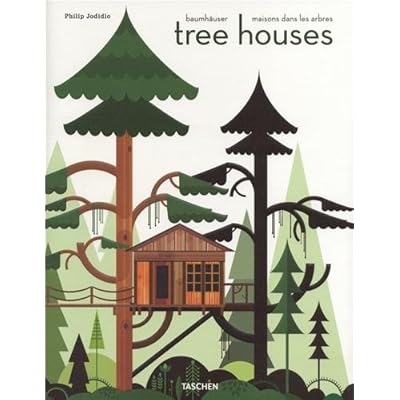
Tree Houses: Fairy Tale Castles in the Air. Source: Amazon
A book from Philip Jodidio showcases 50 of the most eclectic tree houses from around the globe. Some are built by famous architects, and serve as restaurants or hotels. While others are shrowded in a bit of mystery, created by unknown geniuses of the craft. The tree houses exhibit all kinds of architecture styles, from classic romance to modern; and showcase many different cultures. The book includes Japanese teahouses meant for looking at cherry blossoms from new heights; sphere-shaped structures in Canada that can be rented out and are tethered to the trees to maintain balance; and a UFO style tree house in Sweden that can fit two adults and two children.


Source: Amazon.com
I would definitely be interested in visiting some of these tree houses. It's one thing to be up in a tree, but to be in an intricately designed tree house makes it even better. I had a tree house a kid, but it was not all that impressive. It was a square shaped platform among three spruce trees, with short walls and a basic roof. It entertained us to an extent, but we eventually got over the novelty of it and lost interest. it had looked like any of these houses, I think it would have been a different story entirely. In fact, I may have chosen to live in the tree house rather than in my own home.

Not only would it be fun to play around in these adult-friendly tree houses, but it would be interesting to view the world from a completely new perspective. Imagine what you could see from the trees; people would be totally unaware of your presence--oh the possibilities. In all honesty though, I think I would use a tree house to escape, get in touch with nature and just relax as the rest of the world went on below me. That would be a truly memorable experience.


Monday, August 16, 2010

Getting Back to Nature

I wrote a post a few weeks ago that talked about the technology-free vacation. I believed then that it was a great idea. Now, after reading an article in the New York Times Technology section, I find it even more appealing. The article chronicles a trip taken by five neuroscientists to a remote area of Southern Utah, completely detached from cell phone reception or wi-fi. For a week, these scholars hiked, rafted and camped in the wilderness, the whole time discussing how heavy technology use effects our brains and how nature may reverse it.

Some of the scientists were skeptical about it, while others embraced the idea. Since this trip is a rarity in our world today, where people can communicate even from the farthest reaches of the globe, it was difficult for these men to give up their laptops and blackberries. But they did it, and you know what, I think it was the best thing for them. They even reported, after a few days of physical activity and fresh air, they were more relaxed, focused and reflective. The constant nagging of a cell phone seemed to dissipate, and it almost seemed silly to want to check email. Even with important happenings going on back at home, the scientists were able to push it aside and enjoy a trip that took them away from it all--literally.

Not only did the trip effect their personal gadget-checking tendencies, but it also changed how they looked at their scientific research. According to  David Strayer, a psychology professor at the University of Utah, what happens to us when we step away from our devices is important to study, it's essential to science. What these scientists found was that taking time away from technology and spending it outside participating in physical activities increased their focus and attention. Their minds were able to relax, producing clearer thoughts and more cognitive reasoning. Perhaps nature is the cure. Of course, the scientists all need more proof of this before jumping to that conclusion. Mr. Braver, a brain imaging expert and one of the skeptics, wants to use imaging to study what happens to the brain when it rests. Mr. Kramer, a professor at the University of Illinois, wants to investigate the benefits to the brain that occurred, whether they were due to being in nature or by participating in physical activities. Mr Atchley, a professor at the University of Kansas, says he wants to study the addictive nature of people and how it can result in bad decisions and destructive behavior.

While the trip didn't cure them of their technology dependence, it did make them realize that a little downtime is important, a way to unclutter thoughts and focus attention. Isn't that why they call it a vacation? It restores you, in a way. I've felt strongly about the need to take a break, because working too much, multi-tasking, checking phones and emails 24/7 can fry your brain; it's mentally exhausting. If you don't take some personal time, you'll go crazy.

I don't know if I would be able to completely give up technology for a week--or even a weekend--but it is something I am willing to try. If nothing else, it will be a freeing experience. Now, I just have to convince my boyfriend, who has a computer permanently attached to him at all times, to come along for the trip.
Tuesday, July 27, 2010

Great Wine from an Unexpected Source

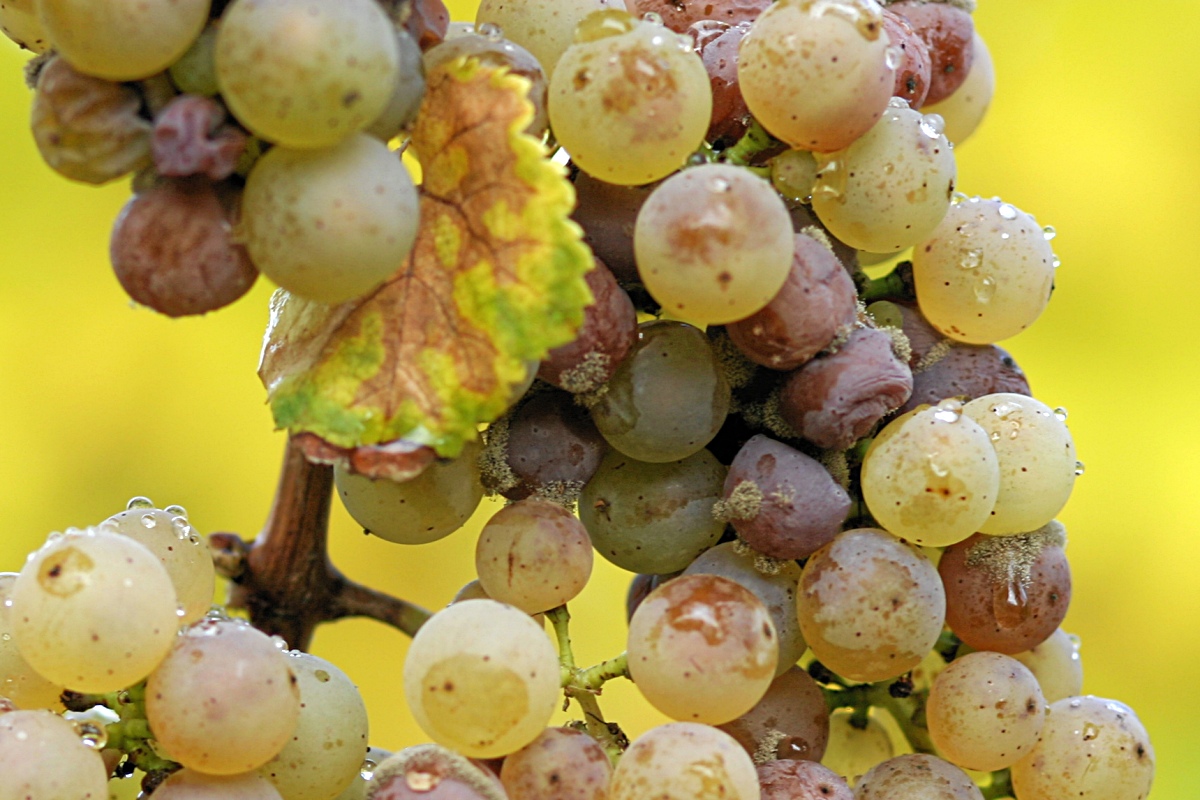
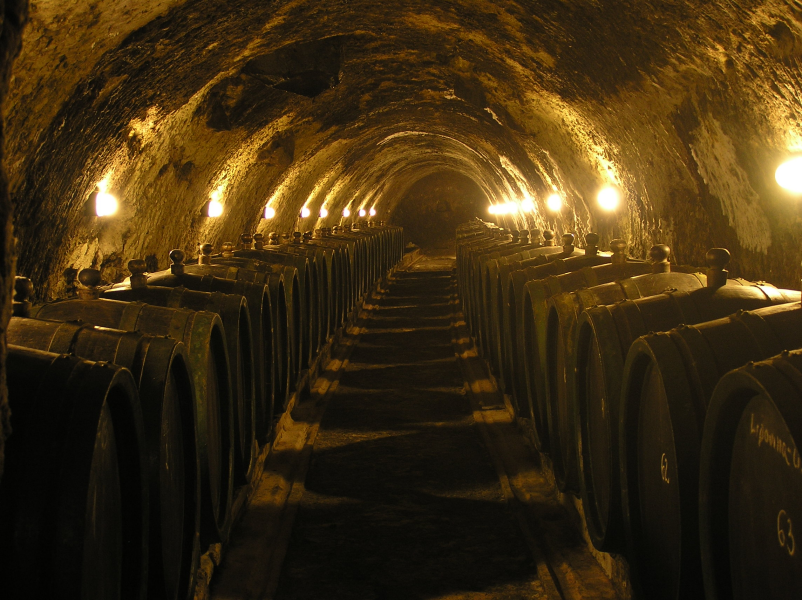
Imagine sipping wine poured straight from the barrel, letting the taste of fresh fruits and sweet spices settle on your tongue. Now imagine those citrusy, crisp flavors came from moldy grapes grown in the moldiest region possible. It's no joke, it's real. Mold in the city of Tokaj, Hungary, is responsible for some of the best wines in the country. Since two large rivers, the Tisza and the Bodrog, converge in this area, moisture and dampness take over, making it a breeding ground for fungus. But unlike wine cellars in California, France and Italy, Hungarian wineries embrace the spores. The black mold, Cladosporium cellare, thrives in the wine cellars, and Botrytis cinerea, also called “noble rot,” attacks the grapes in the vineyard. But this is one of the secrets to the famous sweet wines, like Tokaji asz.

The way it works, as I understand it, is when the mold attaches to the grapes, they dry up into solid balls of concentrated sugar. This allows for a very unique flavor to emerge. The reason fungus works in harmony with the grapes is because the vineyards are planted with furmint. Apparently, this is beneficial to fungus.

But if you want to try the full range of wines from the area, it is nearly impossible. These wines, though becoming more and more well known around the world, are a rarity outside of Hungary. So it seems a trip to the Hungarian countryside is a must in order to taste the unique complexities of these wines.

I'm a big fan of wine, trying different bottles from different regions every chance I get. But I had no idea that Hungary had a wine region comparable to Italy's Chianti or France's Bordeaux. So how did I hear about this booming wine capitol? Where else but NY Times Travel section. Evan Rail had the privilege of venturing to Hungary to sample some of their exquisite wines, and I have to say, he inspired me to travel there as well. I have always wanted to visit Budapest, and apparently Tokaj is only two and a half hours away by car. It seems like it would be a nice side trip.

Rail recommends, in his article about the vines of Hungary, that travelers rent a car when they arrive in Budapest, since it will be much easier to get around to the different vineyards. For lodging, there are a number of options, but he suggests Grof Degenfeld Castle Hotel in Tarcal and Torkolat Panzio in Tokaj. Usually special offers are available, but you will have to do some research on the deals and see if they are worth it. From Rail's descriptions of the accommodations as well as the many wines he sampled, I'd say it's definitely worth it. I probably won't be able to schedule a trip this year, and next year might be difficult, too. (I did just start my job three weeks ago, and it's not like the money's rolling in.) But wine is something I truly appreciate in life, and I think it's important to branch out.

Wine making is an art form, even when painting with moldy grapes.