Pages

Showing posts with label tourism. Show all posts

Tuesday, July 8, 2014

Topic Tuesday: GOP Picks Cleveland for 2016 Convention

This just in: the Republican National Committee selected Cleveland to host the 2016 presidential convention.

Cleveland Skyline © Wikipedia
This is a huge win for the city, which beat out Dallas for the convention. Cleveland convention officials view the event as an opportunity to promote the city as a great meeting and convention destination, as well as a solid leisure destination. The city has undergone billions in new development and renovations downtown, and is eager to show off the recently opened 750,000-square-foot convention center.

The city will provide venues and security for the four-day event, and provide hotel rooms for the estimated 40,000–50,000 delegates, journalists, party officials and guests that will descend upon Cleveland in the summer of 2016.

But apart from the convention center, meeting spaces and hotels, Cleveland will also take the opportunity to promote its culture, nightlife, dining scene and attractions. These conventions bring a lot of national attention to the city that hosts them, as well as many writers who will document their experience, not just at the convention and during the presentations, but also around the city.

So, what can visitors do in Cleveland? A lot, actually.

Rock & Roll Hall of Fame © Wikipedia
The top attraction has got to be The Rock & Roll Hall of Fame and Museum, showcasing the evolution of the musical phenomenon through dozens of ongoing and temporary exhibits. You can see John Lennon's Gibson J-160E acoustic guitar, or artifacts from contemporary artists like The Black Keys.  The venue also hosts concerts throughout the year, and the gift shop is free to browse.

Interact with nature at the Cleveland Botanical Garden, or come face-to-face with wildlife at the Cleveland Aquarium or Cleveland Metroparks Zoo. There are plenty of museums covering a range of interests, from art to history to sports. Marvel at the 45,000 works of art at the Cleveland Museum of Art, discover bones, gems and more at the Cleveland Museum of Natural History, or pay homage to one of America's favorite pastimes at the Pro Football Hall of Fame (located in Canton).

West Bank of The Flat © Wikipedia
If you prefer the outdoors, Cleveland delivers there too. The city is called the "Emerald Necklace," due to its lush greenery and thousands of acres of hiking, biking, boating and swimming. Do some kayaking right downtown, in The Flats, or take a nine-mile bike ride at Cleveland Lakefront State Park.

Foodies will revel in the selections at Cleveland West Side Market, featuring more than 100 vendors selling meats, cheeses, baked goods and prepared foods. And speaking of food, you'll find an incredible array of dining options, including delicious spots from celebrity chef Michael Symon such as Lola, Lolita and B Spot. Cleveland's diversity also makes it a great food destination, with a plethora of ethnic restaurants that run the gamut of traditional, family-run establishments to trendy, must-go-there-now hot spots. You can also enjoy a number of distinct bars, breweries and wineries – yes, wineries, 50 to be exact!
West Side Market © Wikipedia

Cleveland also offers great shopping, unique annual events and festivals, thrilling nightlife and entertaining sporting competitions.

I think the convention will definitely be a boost for Cleveland, a city that seems to be rising and is ready to show the country what it's made of.

Friday, July 26, 2013

Controversial Arenas

The economic conditions in many states have caused government officials to seriously evaluate budgets and how taxpayer dollars are being spent. The ultimate goal is to come up with a spending plan that will dispense funds to areas that need them the most, while also helping to stimulate economic growth and make a profit through investments and new business opportunities. However, there is not always agreement over how or what will accomplish that goal. For some, education, public defense, infrastructure and healthcare, are considered the most important investments, as they are beneficial to locals. For others, tourism, hospitality, athletics and entertainment, qualify as the most worthy of state money, as they bring in lots of foot traffic and profits.

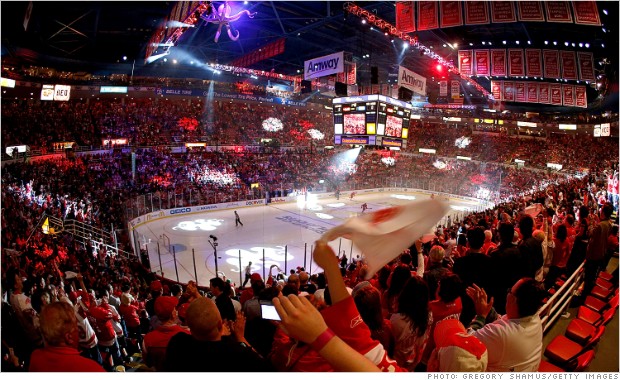
Detroit plans to spend more than $400 million in taxpayer funds to build a new hockey arena for the Red Wings. In addition, the developer committed another $200 million to build retail, office, residential and hotel spaces. Advocates say it is the kind of development needed to attract people and private investment  dollars in Detroit, which is in the midst of a financial crisis. In fact, just last week the city filed for bankruptcy, becoming the country's largest public sector to do so. The move could cut pension benefits to city employees and retirees, a big concern for many residents. Even with the bankruptcy, Detroit still plans to build the arena. Opponents of the idea say the project won't have enough economic impact to make it worth the cost, and argue that it is the wrong spending priority for the city, which has a number of other areas that trump a sports stadium.
Detroit's current hockey stadium. Source: CNN

But the governor and city planners believe a stadium is the right move, as it will create an estimated 8,000 construction jobs, a big boon for a city with high unemployment. Not only that, but the stadium is estimated to create more than $1 billion in direct spending in Detroit over the next 30 years, according to a university study. This is due to the fact that it will be in the middle of a depressed city and in a good location next to a baseball and football stadium, which will encourage private investment in other infrastructure.

While a new stadium in Detroit might be the answer, it may not be the best move for other cities. More often than not, stadium and arena projects have little economical impact because a city may already be thriving or they are in a poor location.

Chicago recently announced plans to build a $173 million basketball arena for DePaul University next to its convention center, McCormick Place. The stadium is part of a larger plan, called "Elevate Chicago," to revamp the center, as well as Navy Pier--considered one of the top attractions in the city. While the arena is ultimately to serve as the home of the Blue Demons (DePaul will fund a portion of the construction cost), it will be used more as an event center for McCormick Place, hosting trade shows and conventions.
Digital rendering of DePaul Arena. Source: Huffington Post

The amount of money from taxpayers to pay for the DePaul stadium is about $55 million--considerably less than Detroit--but there are a few people who do not agree with using that money for an arena. There are many people who think Chicago already has plenty of arenas that can be used for games, events, shows, etc., and the money could be put towards other things--such as education.

Advocates for the project argue that the arena, along with a new hotel, will bring in more private investments for retail, dining and other attractions around the convention center. In fact, one of the goals of the project is to beautify the two blocks north of the center, which are pretty vacant and boring. Building up the area will make it more of a destination for not only tourists, but for locals, too.

Friday, December 7, 2012

From Here to Timbuktu

You've probably heard this saying hundreds of times in your life. I know I have. For the longest time, I thought it was just a phrase people said to describe some far off place, a long journey to distant shores, that kind of thing. I had no idea it was an actual place.

Mali. Source: CIA World Factbook
For those of you who had no idea Timbuktu is real, don't worry, you are not alone. There are millions of people in the world who believe it does not exist, and even more people believe it's a mythical location. The mysticism of this historic region can be attributed to the legendary tales brought to Europe from various explorers, painting Timbuktu as the epitome of distance and intrigue. Stories of great riches drove travelers there from all over the world. Reality is a little less glamorous than legend told, so now Timbuktu is made famous by its location, mystery and seclusion. Even the English dictionaries cite it as a metaphor for a faraway place. After learning this, I felt better about not realizing Timbuktu was a real destination.

So where is it, you ask? Timbuktu is in the western African country of Mali, which is surrounded by many other countries, including Mauritania, Algeria, Niger, Senegal, Guinea, Cote D'Ivoire and Burkina Faso. Timbuktu sits along the Niger River, at the exact point where it flows northward into the southern edge of the desert, making it a natural meeting spot for dozens of local tribes. For hundreds of years, Timbuktu was where goods between West and North Africa were traded. The region has come under the rule of many empires throughout the years, and was most recently controlled by the French from 1893 to 1960, when Mali received independence. The country thrived for dozens of years on the production of certain goods, but also from its tourism industry, its third-largest revenue generator.

Nearly 170,000 visitors came to the country in 2011, helping support the economy and local businesses. However, that has come to a dead halt due to a coup that took place in March, when a group of junior soldiers took control of the presidential palace and said the government had dissolved. In addition, the northern part of the country has been occupied by militants associated with al-Qaida for years. The events pretty much killed tourism in the country, and the first half of the year only saw 7,000 people enter Mali--which I can only assume visited before the March attack. According to an NPR article, one tour guide in the city of Segou said the last big tour group he saw was in February. The story notes that hotels have laid off staff or closed all together because of lack of business, while once bustling riverside markets and restaurants are desolate. Local craftsman and performers sit around with little to do, and no source of income with which to spend on necessities like food and clothing, resulting in even more economic slowdown.

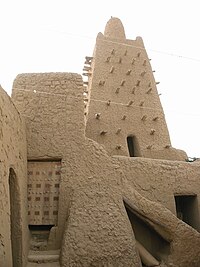
Timbuktu. Credit: Wikipedia
While the incidents of 2012 definitely hurt tourism in Mali, trouble has been brewing there for some time, particularly in Timbuktu, slowly deterring people from going.  In 2008, the al-Qaida militants started kidnapping tourist groups, and as a result, many countries started advising their citizens not to travel far from the capital of Bamako. Timbuktu saw its tourist numbers drop significantly.

It is truly unfortunate for Mali, as well as those who wish to visit its borders and witness the remains of its ancient history. The cultural treasures of the country have been crushed by the crisis, as the Islamists have demolished many historic sites in the north, which is devastating to its past and its future. While there is some hope for change and a re-establishment of the government, much damage has been done to the country, and the mystery and seclusion of Timbuktu has become even more pronounced.  It seems this remote part of the world will remain a mythical, faraway place for many.

Tuesday, June 26, 2012

North Korea Stirs Curiosity, Draws More Tourists

Of all the places in the world to go, one of the last places I would ever consider is North Korea. Mostly because I associate it with dictatorship, repression, nuclear war, poverty...not exactly selling points in the tourism industry. And yet, a number of Westerners are taking trips to the country, due in large part to curiosity about what its actually like.

In 2010, North Korea lifted the restrictions on American citizens traveling to the country. They are now able to visit anytime of the year, but they cannot travel by train and are not allowed to participate in homestay programs. Tourists do not have the same freedom as in other destinations, and they must be part of a tour and have a Korean escort. All visitors need a visa, which will be issued once a tour is booked, approved by authorities and paid for. It sounds a bit daunting, and travel is certainly limited, but that doesn't appear to be detering guests.

According to Koryo Tours, based in Beijing, about 3,500 Western and 40,000 Chinese tourists went to North Korea in 2011. And the number is expected to grow this year, especially as the image of the country continues to change under the rule of Kim Jong-un, who took over in December after the death of his father, Kim Jong II.

Tour companies, like Koryo, said there are many misconceptions about North Korea and its people, but the country offers a variety of great experiences just like any place else...tourists just need to give it a chance. Another common belief is that all tourists must have the same fixed itinerary that the government dictates, but there are a variety of tour packages available. Koryo, for instance, offers itineraries that include museums, parks, monuments and other areas around the capital Pyongyang; the demilitirized zone on the North Korean side of the border of South Korea; and Hamhung, an industrial city that was opened to tourists in 2010.

There are plenty of other tour groups that offer itineraries to North Korea, and the price of the vacation will vary depending on group size, trip length and sightseeing options.

Even though the country has opened its doors a crack to tourists, indicating that it is becoming a little less rigid on government control, there are still plenty of restrictions placed on guests. Visitors cannot use cellphones, send email, walk down the street without an escort, talk to strangers or take pictures of people or places that are not approved by the escort. (For an interesting account from a reporter, check out this article from the Washington Post.)

Juche Tower
I realize that some of this might be putting a few of you off the idea of visiting North Korea, but if you're still with me, here are a few places that are highly recommended to see once you are in the country--and hopefully the tour you booked takes you to these places:
  • Kim II Sung Stadium
  • Kim II Sung Square
  • Tower of the Juche Idea
  • Daedong River
  • Koguryo Tombs
  • Arch of Reunification
  • Geumsusan Memorial Palace
Mass Games
One of the best attractions in North Korea is the Grand Mass Gymnastics and Artistic Performance Arirang, popular festivals held at the Kim II Sung Stadium. The events run for two months and held annually on Kim's birthday. The whole thing is kicked off by over 30,000 school children holding colored cards that create a massive mosaic. Guests can witness complex and highly choreographed group routines by dancers and gymnasts.

On the border between North Korea and China is Heaven Lake, located within a caldera on top of the volcanic Baekdu Mountain. This is one of the most popular sites to see in the country as it offers breathtaking views of the water and the surrounding mountains. 
There is a lot of great information on more attractions in the country at the official Korean Tourism website, which mostly features travel in South Korea. Still, there is a section dedicated to the spectacular sites of North Korea.
Despite the wonderful sites of the country, and the changes that are being made within its government, I am not completely sold on taking a trip there. I am all about spontaneity when I travel, being able to go wherever I want, whenever I want, and the restrictions set by North Korea definitely hinder my ability to explore freely. Given that fact, I'd say I'll hold off on traveling to North Korea until it gets a little more lacks with tourists--though that's not likely to happen very soon.

Thursday, January 5, 2012

Why Croatia? The Wine...Of Course

It has been predicted that Americans will travel farther and spend more in 2012, with long-hauls to Europe, Asia and Australia already up for the year. And when travel agents were asked to pick the top up-and-coming international destinations, over a third of them said Croatia.

There are some obvious reasons why agents chose Croatia: its timeless treasures, breathtaking seaside views from rocky coves, throbbing nightlife, angelic forests, picturesque mountain waterfalls, baroque architecture, storied history, dynamic culture and delectable dishes. But one aspect of the country that does not get as much hype or attention is its wines.

A little background. Croatia's wine history dates back to the Ancient Greeks, and wine production has been going on in the southern regions for over 2,000 years, so clearly it has deep roots and experience in viticulture. Talk about impressive credentials. Many traditional grapes still live on in Croatia, and many of the wineries have introduced modern technology and techniques in order to bring out the very best of those grapes.


Plavac Mali. Credit: Snooth.com
According to an article in Bloomberg, under Yugoslavia's communist rule, Croatia was forced to destroy more than 160,000 hectares--a unit of land surface equal to 2.5 acres--of vineyards. The war with Serbia in the 1990s ruined thousands more of the fertile land. Economic and ethnic turmoil in the country caused Croatia to fall behind in the saturated global wine market, a sad setback for a country that used to make 650 different wines. However, it has more than double the vineyard land that New Zealand has, posing it as a real competitor in today's industry. It also helps that California's popular varietal zinfandel is a variant of Croatia's plavac mali--or "little blue"--meaning it has a flavor complex that millions of people will enjoy.
In the last 10 years, Croatia has opened many wine roads as a major part of its gastronomy tourism efforts. Most of them have opened in Central Croatia, mainly in the northwest areas and Moslavina. And while they are very busy all year round, the fall harvest time is most interesting to witness. Croatians are proud of their heritage, and enjoy celebrating their various traditions. November 11 is St. Martin's Day, the final and most important holiday of the year for winegrowers. It is when farmers christen the young musk and its transformation into wine. The country throws many festivals in honor of this day, and the events include a number of local customs.

Clearly, Croatia has a long-standing wine history, so why don't more people drink its products? Well, as of right now, it only ships about 5% of its 60 million litres of wine out of the country, which means most of the good stuff remains within the borders. The solution? Go there!

But where exactly should you go? Croatia has over 300 wine regions, and a very strict classification system that guarantees a wine's proper origin. Some of the best wine production can be found on the Dalmation islands, and there are a number of top wineries and vineyards that dot the countryside in the Peljesac Peninsula. Here is where you will find Grgic Vina, the Croatian counterpart to the acclaimed American winery Grgich Hills. Other areas in the Coastal region are Istria, in the north, where the focus is fruity white wines, with most being made from the Malvazija grape.

The Continental wine region stretches along the Drava and Sava rivers, and production is focused on white wines. Slavonia is the best-known area, and the most common grape planted there is Grasevina, which creates light, refreshing and crisp wines.

Zinfandel grape. credit: snooth.com
I could continue to list all the wine regions of Croatia, but I find that would get rather old and tedious. Instead, I recommend finding a good travel guide book or doing a little research online before deciding where to go. But do not limit yourself to one location, because then you'll be missing out on some truly incredible wines. Find the places that make varieties that fit your taste, and then make a plan to try to hit all the wineries in those regions...a true Croatian wine tour. (Perhaps this will be my next project.)

With its vast expanse of land, wide grape variety and ideal climate, Croatia has more than enough options for you to choose from when it comes to wine. No matter what area you visit, you will more than likely find a fantastic vineyard nearby that provides tastings, tours and bottles for sale. Croatia has been slow to market its wines outside of the country, and not many people in the U.S. have had the privilege of trying them--which is a real shame. However, this can easily be remedied by those who are willing to take a long journey abroad.

Croatia has always been on my list of destinations, and with this newly acquired knowledge about its wines, I have even more reason to plan a trip there--sooner rather than later.

Friday, April 8, 2011

But the Cherry Blossoms will Still Bloom

America is in the midst of a potential government shutdown, and while most of us will be able to go on living our lives, many will be seriously affected by this if it should happen. Those in Washington D.C. will be hit the hardest, especially in the tourism industry.

In case you were not aware, if a government shutdown were to happen, a number of places will be forced to close, too. These include:
  • National Parks
  • Smithsonian Museums
  • The National Zoo
  • Public Libraries
  • DC Trash collection will be suspended
  • DC Department of Motor Vehicles
  • Street sweeping and pothole services will stop
  • Most federal government offices
  • IRS paper claims filings will not be processed/audits will be suspended
There are many other facilities that will have to close, and many people will not receive pay or get their tax redunds.

Bottom line....it's not a good thing.

Cherry Blossoms. Credit: USA Today
However, I did receive some good news today despite all the horrible news stories I have been reading: The Cherry Blossom Parade in DC will be held. Many--including myself--feared that the event would be canceled since it is run by the National Park Service, and part of the parade runs along Constitution Avenue, which is also under their jurisdiction. Luckily, festival orginizers have a plan just in case their is a shutdown. The parade route will be altered to avoid the area in Park Service territory.

The festival draws about 100,000 spectators during one of the busiest times for tourism in the city, so of course organizers were going to take every possible step to make sure it would not be cancelled. Even with many museums, monuments and attractions closed over the weekend with a shutdonw, the local tourism bureau is encouraging people to still visit. Some of the smaller, private museums will still be operating, and even offering discounts on admission.

Plus, there are numerous restaurants around the city preparing "shutdown deals," offering everything from discounted meals, free cups of coffee and free burgers. Clearly, businesses are trying to make the best of the situation.

Because even if our government cannot figure out a way to function, we can still see the cherry trees blossom.

Wednesday, February 16, 2011

Unique Tourism Advertisments

In an effort to improve tourism, Levenworth, Washington, created a youtube commercial to promote its Bavarian-style town and exciting culture. The ad has generated a lot of buzz among travel experts and tourists. Travel marketing professionals do not doubt the effectiveness of the commercial, but there is skepticism about whether or not it will hurt tourism in the long run.


Levenworth is portrayed as a young, hip party town, concerning locals who believe tourists may get the wrong impression. However, the commercial does show family-friendly aspects as well, including mini-golf, rafting, golfing and festivals. If viewers can look beyond the scantily clad dancers, steins of beer and trendy nutcracker, they will see that Levenworth has a culturally rich atmosphere and recreational activities galore. Of course, the nightlife is certainly a selling point, and the advertisement has tapped into that.

In all honesty, I love the commercial. It's funny, eye-catching and entertaining. After watching it, I am seriously considering visiting Levenworth, Washington.

Monday, January 31, 2011

Protests and Violence in Egypt Affecting Tourism

The riots and protests that broke out last week in Egypt have caused unrest in the country, causing many travelers to cut their trips short or cancel them altogether. But the violence erupting in the country are not only causing social and political problems, but it's also affecting tourism and the economy. According to an article from MSNBC, the event is raising concerns of widespread affects, with problems trickling over into other Middle Eastern countries. It's an understandable concern, since many travelers have decided to cancel their vacations, tour groups are avoiding Egypt, airlines are stopping flights into Cairo and thousands of U.S. citizens are evacuating the country.

It couldn't be happening at a worse time, as this is high season for tourism in Egypt. Tourism is a major industry for Egypt, with 300,000 visitors coming in every year--and that's just from the United States. With more and more Cruises evading Egypt on their routes, and tour groups opting not to visit, investors are growing concerns that it will spread elsewhere. In fact, Dubai's stock market index fell 4% Sunday, while Kuwait fell 2% and Qatar, 3%. With the prospect of the Suez Canal closing, oil prices spiked, causing even more issues for tankers and large boats.

As far as the U.S. tourists, students and residents over in Egypt, many of them are deciding to head home, despite some strong desires to stay. The Today Show spoke to many people who live in the country, and they say that even with their established lives there, it seems smart to leave. Hundreds of tourists were held up in their hotels, nervous to walk the streets. Students studying abroad were less worried about getting hurt than their families at home, which was the main reason for many of them evacuating. At first, there was not much concern for their safety, but over the weekend as things escalated, it seemed the Egyptian government would be unable to protest foreign travelers, as it can barely manage itself. 

The Middle East's troubles have always been an issue, especially with the violence in Egypt occurring after events in Yemen, Lebanon and Tunisia. But even with past terrorist attacks and turmoil, tourism has always managed to bounce back, because people still want to see those parts of the world. No matter what, tourists will continue to venture over to Egypt to see the Pyramids and sail the Nile River.

Since it is unknown, however, how long the political upheaval will last, it's safe to assume that travel to Egypt will take a huge beating over the next few months. Travel agencies across the U.S. are predicting that anyone who has a trip planned there will probably attempt to cancel, and there will be very few inquiries about vacations there this year.

With any luck, the riots and protests will fizzle out over the next couple weeks, the country will figure out a peaceful solution to their problems, and people can return to their lives. I certainly hope that things improve quickly, as Egypt is one of the places on my list I want to visit. Then again, it should all be resolved by the time I have enough money and vacation days to go. I'll keep my fingers crossed.

Thursday, September 16, 2010

Venturing to Nova Scotia

I was browsing through the latest news stories on Hospitality Net when I saw the announcement that the Culinary Tourism World Summit would be held in Halifax, Nova Scotia. What peaked my interest about this was not the renowned culinary leaders or special events or fabulous dinners that would take place at the event, but rather the location itself. Nova Scotia? Really? So I did a little research, and as you may or may not have guessed, I'm adding another destination to my list.

Nova Scotia is located directly East of Maine. (This truly surprised me, because I had this idea that Nova Scotia was way further North than that, closer to say...Greenland. I was way off.) Halifax is a bustling port city said to be the gateway to Atlantic Canada. It's rich maritime history and eclectic modern vibe make it a place worth visiting. But don't let my praises sway you, just listen to all the things you can see and do in Halifax.....

The heart and soul of this seafront town is, of course, it's harbor. If you are a history buff, make a trip to Pier 21 and the Maritime Museum of the Atlantic. Canada's version of Ellis Island, Pier 21 was the doorway for over one million immigrants who came over to Nova Scotia between 1920 and 1970. Genealogists will truly appreciate this testament to Halifax's ancestors. The Maritime Museum is the largest one on Canada, housing artifacts, photographs, charts and maps relating to Nova Scotia's marine history. Exhibits feature the Halifax Explosion of 1917, the Royal Canadian Navy, the merchant marine, the Halifax connection to the Titanic and the many local shipwrecks that occurred around the harbor. At Fisherman's Cove, you can watch the local fisherman come in with their daily catch, or take a boat ride out to McNab's Island. Peggy's Cove is a picturesque destination known for it's breathtaking scenery and traditional lighthouse--which is also a working post office.

The Halifax Citadel is a star-shaped naval station nestled atop a hill in the middle of downtown. This living history museum offers guided tours from an costumed patron, who will show you the musket gallery and garrison cells. At noon every day, the 78th Highland Regiment fires the cannon. Halifax is brimming with antique buildings that transport visitors back to the early years of the city's settlement. St. Paul's Church, built in 1750, is Halifax's oldest building and the first Protestant Church in Canada. One of the most famous structures in Halifax, Old Town Clock started keeping time for residents in 1803. Other buildings of note are Province House--a Georgian building that housed the first government in the British Empire--and Government House--home of Nova Scotia's Lieutenant Governor and the oldest government building in Canada.


Halifax is a outdoor enthusiast's paradise; with kayaking, hiking, fishing, golfing and more, guests will never run out of things to do. You can take a deep-sea dive to explore the graveyard of shipwrecked boats around the harbor, or relax in the sun on one of the many gorgeous beaches. Surfers can enjoy great waves on the Eastern Shore at Lawrencetown Beach, while hikers can huff up the 14-mile trail at Taylor Head Provincial Park.


As far as entertainment and nightlife go, Halifax doesn't disappoint. The city is known for it's vibrant music scene, and visitors can experience exceptional shows at Symphony Nova Scotia or Neptune Theater. There are also a number of festivals and events to attend, like the Halifax Pop Explosion, Nocturne: Art at night and Atlantic Film Festival, just to name a few. The nightlife thrives with packed bars and contemporary restaurants, most of which are in walking distance of downtown.


The culinary experience in Halifax is one guests won't soon forget. They are known for their seafood dishes--I can't imagine why--and the award-winning chefs are meticulous with their dishes, creating true masterpieces on the plate. Visitors can indulge on Digby Scallops and Nova Scotia Lobster, the savory delights can be found on many restaurant menus. But the dining experience doesn't have to be super fancy, there are casual eateries up and down the waterfront where tourists can grab a quick bite. There are way too many restaurants to name, but you can trust that you'll find something great no matter where you go.

Halifax, Nova Scotia is a wonderful city full of Canadian culture and heritage. (Those Culinary experts may be on to something.) With it's beautiful beaches, active harbor and exciting nightlife, Halifax seems like a great place to travel to. And since I've never been there myself, I think it's time I looked into a little trip across the border.

Thursday, January 21, 2010

Figuring Out the Future...I'm Getting There

As many of you know, or don't know, I started a new job at the beginning of this month. No, I am no longer filing away applications at DePaul. Now, I am writing technical user guides for website building systems. Doesn't that sound exciting? Well it's not. Trust me. I have been here three weeks, and I already know this is not what I want to do with the rest of my life. So I am going to push through the rest of this apprenticeship (one of the main reasons I took it--looks good on a resume and good experience) until I am finished around April or May, and then it's on to bigger and better things.

The goal? Working for the Chicago Department of Cultural Affairs. Why you ask? Because one of their divisions is the office of tourism. Ding, ding, ding, ding, ding, JACKPOT! If there is one place I know I can work, it's there. Travel + promoting a city I love + organizing events for tourists and citizens = dream job! Also, after looking into the website a little more, I noticed that the Cultural Affairs department also has divisions in publishing, fashion, and culinary arts. All things I love and enjoy almost as much as travel!

So the plan is to inquire about any positions as soon as possible. If there aren't any available jobs, I will just keep contacting them every couple weeks, that way they will know my name. I also plan on sending in a hard copy of a resume and cover letter to them, which should illicit even more of a response. Finally, I will ask about volunteer opportunities at the Cultural Center or Millenium Park or anything else they may have going on in the next couple months. The more involved I become, the better chance I have of snagging a job.

Cross your fingers for me!