Pages

Showing posts with label history. Show all posts

Monday, January 30, 2012

Riding a Camel in a Convention Center

I had the privilege of attending the Travel & Adventure Exposition this weekend--due mostly to the fact that it was being held in the same building as the Lululemon warehouse sale and my friend found a way to get free entry. However, it was also a great opportunity to discover some new destinations, learn about exciting tour offerings and ride a camel...

Yes, you heard me right, a camel. To promote some of the safaris in Africa, one of the groups provided a real camel for people to ride. So my friend Bernice and I hit that booth first and hopped on up for a quick lap. It was certainly a good marketing scheme, which is mostly what these conventions are anyway.

The rest of the time was spent wandering around to the different booths, hearing various pitches about what makes this destination so great, or why we should choose this tour provider, or how to enter to win a free trip. There were so many fliers, booklets, and information sheets, that before I knew it, the bag I was carrying weighed at least 10 pounds.

While I certainly received more information than I could possibly ever need, the disadvantage of these kinds of events is that you are bombarded with so much in such a short amount of time, that a lot of stuff can get lost or forgotten by the end of it. I cannot really recall half of the booths I stopped at--unless I sift through all my papers--and I know I entered a few contests, but I'm not really sure which ones they were.

I will say, however, that I gained a lot of insight about places from the representatives there, because they are the experts, and a majority of the time, they are locals. The best way to learn about a place is to talk to the people who actually live there. We got the chance to listen to a Q&A session with travel industry experts about finding the best places to eat when traveling, and the piece of advice they all gave was to find a local coffee shop and ask residents to suggest where to eat. The same goes for activities to participate in, places to see and hotels to stay at. (This is another reason I love Anthony Bourdain's show The Layover, because he talks to locals and rarely refers to travel guides or visits all the big tourist spots.)

The adventure tour booths were some of the most exciting for me to visit. One that looked interesting was Adventure Center, which offers everything from culture & history and wildlife & wilderness tours to cycling and polar voyages. Of the historical trips, Bolivia Highlights or Treasures of Turkey are the first two I would opt for. The Bolivia trip is a 12 day itinerary that explores the region's indigenous country, La Paz, Sucre, Potosi's mines and the Uyuni Salt Flats. The Turkey tour is 15 days and highlights contemporary Istanbul and the ancient remains of older civilizations at site like Troy, Gallipoli and Ephesus. For something a bit more active, the Darjeeling, Sikkam & the Singalila Ridge walking and trekking 15-day tour gives you the chance to explore Tibetan Buddhist monasteries and trek through the forests of rhododendron and magnolia to see views of the Himalayan Mountains. Another one that sounds ideal to me is the Chianti: Walking & Wine tour, a week long stroll through Southern Tuscany's hilltop villages and vineyards.

For my first travel expo, I would say it was a success, though slightly crowded and hectic. I hope to frequent more of these in the future, perhaps when I have established myself more as a travel writer and analyst.

Stay tuned....

Thursday, December 1, 2011

Trimming the Tree

Today is the first day of December, and in celebration of the holiday season, my roommate and I are planning to "deck the halls"--or our apartment--with a bunch of Christmas decorations, including the staple of the season: The Christmas Tree.

Trimming the tree has been a cherished tradition in our culture for hundreds of years, but the history of this act dates back decades before our country even existed. There are numerous accounts of how the Christmas tree tradition came to be, but most historians can agree that it goes back to the early Romans. In the Northern hemisphere, the longest night of the year--also known as the winter solstice--occurs around December 21. Romans celebrated this time with a feast called the Saturnalia, in honor of Saturn, the god of agriculture. Since the solstice meant that farms and orchards would be green again soon, the Romans decorated their homes with evergreen boughs. They would exchange gifts, giving coins for prosperity, pastries for happiness, and lamps to light one's journey through life.

Years later, Germans and Scandinavians put evergreen trees in their homes or just outside their doors to represent their hope for the upcoming spring. This tradition helped us evolve our current practices with trees indoors and wreaths hung in entryways. Germany is largely credited with launching the Christmas tree tradition as we know it. It is widely believed that Martin Luther was the first to actually decorate a tree with lighted candles to recapture the scene he witnessed of stars twinkling through the branches of the evergreens.

In the United States, the tree most likely came from Hessian troops during the American Revolution, or with German immigrants in Pennsylvania. One of the first accounts of a tree in the U.S. was in the 1830s, when settlers in Pennsylvania displayed them in their hopes. However, many Americans saw the trees as pagan symbols and they were not accepted at first. It was only after an image was printed of Queen Victoria and her prince, Albert, standing with their children around a Christmas tree that it suddenly became fashionable.

 Christmas ornaments began arriving in America in the 1890s, when tree decorating was growing rapidly in popularity. True to form, Americans took to putting up massive trees that reached from floor to ceiling, while the Europeans continued to use small trees about four feet high. (But we always like things bigger here.) Many people made their own homemade ornaments using wood and cloth, while others used apples, nuts and marzipan cookies. Popcorn came into use after being dyed bright colors and interlaced with berries.

Today, our ornaments and decorations are much more elaborate, which is to be expected. And we have all taken on our own Christmas decorating traditions. And just as every family is different, so is every country. It is interesting to hear about what other cultures do to celebrate Christmas, and how they trim their trees.

Christmas trees around the world. Credit: family-christmas-traditions.com
In the Phillipines, much of the population is too poor to afford Christmas trees, so they must rely on their own creativity to make a tree. They will often use bamboo, branches or other materials to build an artistic rendition of the typical evergreen. They will then decorate them with star lanterns and other handmade ornaments. In Liberia, the Christmas tree is an oil palm tree that they decoate with bells. In the northern part of Brazil, where pine trees are rare, most will buy artificial trees in a variety of colors. In the south, where there are millions of trees, people will decorate them with puffs of cotton to imitate snow. The Japanese do not really celebrate Christmas, but those who do decorate their trees with small toys, dolls, paper ornaments, gold fans, lanterns and tiny candles. Since Christmas falls during the summer in South Africa, many do not have trees, but they will decorate their windows with sparkling cotton, wool and tinsel. The same is true in Australia, and many will celebrate on the beach or with a backyard barbecue. Mnay Aussies will decorate Christmas bushes, native plants with red-flowered leaves.

While my family has adopted many Italian traditions, we have yet to embrace the ceppo, a triangular shelf that is set up in the room. On the lower shelf sits the nativity, the upper shelves are decorated with small gifts, fruits, and candies. Candles can be affixed to the sides and a star is placed on top. This is called the "tree of lights." Maybe I can convince my parents to do it this year, though after 25 years of doing the exact same thing, I think we all might be reluctant to introduce something new.

But I am excited to trim my tree tonight, and perhaps start some of my own traditions.

Wednesday, October 12, 2011

Pan Am: A Glimpse of Travel History

Pan Am is a new fall show that premiered on ABC a couple weeks ago and follows the lives of stewardesses and pilots working for the largest international airline during the 1960s. The women live a privileged life, jetting off to exotic locales each week, like London, Paris and Berlin, experiencing some of our country's most significant historical events.

While the storyline is clearly embellished for dramatic effect--and to please viewers--there is some truth in the series. The uniforms, daily attire and plane design are extremely accurate, proving that the shows' producers did their homework. Another aspect of the industry's history that the show touches on is the high standards that stewardesses had to meet, especially when it came to their appearance. They had to be a certain size--and that wasn't because the planes had a weight requirement--and were weighed every week to make sure the numbers on the scale did not inch up. Stewardesses were more than crew members who brought travelers meals and assisted them in boarding, they were objects to be looked at, especially from the successful business men sitting in first class. They had to be classy, sophisticated and always prepared, beacuse at every moment they were in uniform, they were representing Pan Am.

Apart from the period-appropriate outfits, settings and behaviors, the show also gives viewers today a glimpse into a completely different time for our country, when planes were considered a luxurious way to travel rather than just another commute to get through; when the Cold War and Communism were the main terrorist threats to America; when there was no such thing as a cell phone and people still wrote letters and postcards to stay in touch.

Perhaps my infatuation with the show is that each week they get to go somewhere else, somewhere new and exciting. It makes me envious of the stewardess lifestyle, because they get to see all these places I may never visit. Obviously, the life of flight attendants today may not be as glamorous as it was back then, but that's what I love about it, I can escape to another world for an hour each Sunday night, exploring the world with these women as they deal with their own personal dilemmas. I will admit, it has become my new guilty pleasure.

Thursday, December 16, 2010

Exploring Bulgaria's Cultural Richness

Bulgaria has been a member of the European Union since 2007, but it wasn't until this week that Eurail added it to its network of travel destinations. The 2011 Global Eurail Pass will allow travelers to access the Eastern European country through the Bulgarian State Railways. Representatives of the Eurail Group are eager to expand their reach and tap into the tourism sector that has been consistently growing over the last decade. Visitors can now explore the ever increasing allure of Eastern Europe through Bulgaria's train system, taking in the vast culture and sprawling landscape of the "Country of Roses."

With a history that dates back all the way to the first antiquity--that's the 1st millenium BC, to put it in perspective--the Bulgarians have had a major role in cultural development, philosophy, agriculture, language and social structure. After spending years under foreign rule, including Alexander the Great and the Romans, Bulgaria established its first empire. It grew significantly as a military power, introduced the first code of law, created the Cyrillic Alphabet and grew into a strong Christian country. The empire slowed due to numerous wars, eventually falling and being conquered by the Byzantine Empire in 1018. It was not until 1185 that Bulgaria had an uprising and succeeded in reestablishing their empire. The Ottomans would eventually seize power over the Bulgarians, and the population suffered from oppression and misgovernment under the Turks. As a result, their culture became separated from the rest of Europe. Throughout five centuries of Ottoman rule, the Bulgarians attempted many revolts, and were finally successful with the Russo-Turkish War of 1877-78. Bulgaria was proclaimed an independent state in 1908. After that, Bulgaria began to takes steps to reconnect with Western Europe. Communism was still the main form of government up until the late nineties, early two-thousands, but now Bulgaria is seen as "free."

With the fall of communism and an increased desire to promote tourism, Bulgaria has slowly become a must-see destination in Eastern Europe. And with just one glance at the country's landscape, it's understandable why. The geographic diversity of Bulgaria allows tourists to see snow-capped peaks, beautiful beaches and sprawling plains all in one country. Not only is the natural environment appealing, but the ancient buildings, intricate architecture and traditional sites have drawn millions to Bulgaria's borders. The Thracian, Slavic and Bulgar influences can be seen through collected artifacts, and some of the most iconic pieces include the Thracian treasures, intricately crafted objects that were buried both to hide them during controversial times and for ceremonial purposes. The more famous excavations of these ornate gold and silver items are the Panagyurishte gold treasure (on display at the National Museum of History in Sofia),the Rogozan treasure (known as the find of the century with over 165 pieces discovered) and the Valchitran gold treasure (shown at the National Archeological Museum in Sofia).

Visitors to Bulgaria are fascinated by the county's ancient ancestors, so it's understandable that the many immaculate tombs on display are some of the most popular attractions. Kazanluk, referred to as the valley of the roses, became extremely popular when new tombs were discovered there in the nineties. The Sveshtari Tomb, arguably one of the finest tombs discovered in Bulgaria, dates back to the 3rd century BC and appears to be the resting place of a Thracian ruler. Thracian Tomb tours are available through BG Travel, and consist of a 5-day package of all the best tombs in the country.

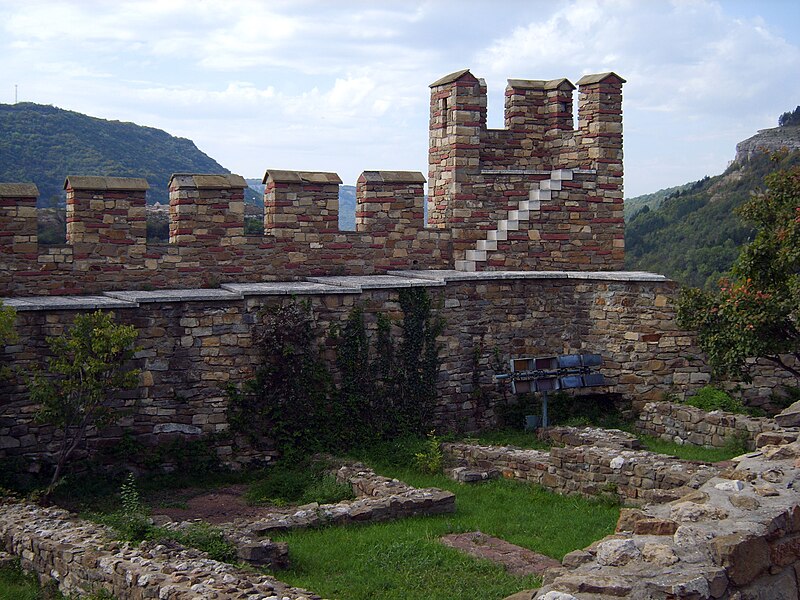
Bulgaria ranks third--behind Greece and Italy--in number of archeological and historical monuments. Apart from the tombs, Bulgaria is full of crumbling fortress walls and forums, temples, amphitheaters, stadiums and monuments. Among these locations is Tsarevets, a medieval stronghold in northern Bulgaria that served as the primary fortress during the second empire. Another noteworthy site is Ledenika, a cave in the Balkan Mountains. The cave contains 10 separate halls, the largest being the concert hall accessible only through the Passage of Sinners, designated only for those whose heart is pure. If you dip your hand into the ice-cold water of the small pool in the cave, known as the Lake of Wishes, and make a wish, that wish is sure to come true. In an effort to promote tourism to these sites and many others, the country created a booklet called "100 Tourist Sites of Bulgaria." It can be purchased at any tourist union center and costs 1 lev (or 0.67 cents).

Bulgarian cuisine is extremely diverse thanks to the warm climate and rich soil. Every meal is served with a salad, which, more often than not, is made with a Bulgarian White Brine Cheese called Sirene. Most dishes are oven baked, steamed or stewed--fried is not an option--and any kind of meat is grilled. Pork dominates Bulgarian food, but many other meat varieties can be found in popular dishes, like Gyuvetch (a beef and vegetable stew). The Bulgarians are known to create quality dairy products, including yogurt, which is said to have originated in Bulgaria. Tourists should not miss out on a traditional pastry called Banitsa, made by layering whisked eggs, sirene cheese and filo pastry and then baking it. As far as drinks go, natives usually turn to Bulgarian Wine to accompany their meals--such as Mavrud, Muscat and Gamza--but Rakia, a fruity liquor, and Mastika are popular options, too.

With all that Bulgaria has to offer, it's difficult to know where to start. I recommend beginning your journey with a few days spent in the capital city of Sofia. Located in western Bulgaria, at the foot of Vitosha Mountain, Sofia sits quaintly in a large valley, surrounded by mountains. Among the city's attractions are the National Historic Museum, The Museum of Earth and Men, the Sofia City Art Gallery, the Sofia Zoological Garden, Boyana Church, and much more. You can relax in one of the public mineral baths or catch a soccer game at Vasil Levski National Stadium. There is plenty to keep you occupied during the day, and even more to do at night. Sofia has an exciting nightlife with plenty pf clubs, pubs, restaurants and mehani--traditional Bulgarian taverns. With Sofia's well-developed bus, tram and trolleycar transportation system, it's easy to get from place to place. The underground still needs work, so it's best to rely on walking or other means of transport. After experiencing Bulgaria's capitol, feel free to venture wherever you want. No matter if you head up into the mountains to ski or out to the beaches to lay in the sun, Bulgaria provides you with a truly great getaway.

So when you're planning your next big trip abroad, and Europe seems like a top contender on your destination list, think about taking advantage of Eurail's passes and taking a relaxing train ride to Bulgaria. You certainly won't be disappointed with this cultural gem.

Monday, September 27, 2010

Ever Thought of Visiting Macedonia?

No? Why not?

Sure, there is not a lot that's known about this small, land-locked country. And yes, it did only gain independence in 1991. Not to mention the tourism sector is definitely struggling in this down economy. Despite all that, there is only one thing that really matters about Macedonia: The wine.

Being the wine enthusiast that I am, hearing that Macedonia was an uncorked (pun totally intended) resource for delicious and unique grape blends made my ears perk up. But I must admit, I didn't know much about the country other than where it is located, in the Balkans. So, I decided to do a little research, and discovered some interesting facts about The Republic of Macedonia.

The fact that Macedonia is not on the radar does not surprise me, since the country has struggled with so many economic difficulties since their independence from Yugoslavia. They started off at the short end of things by being one of the less-developed regions of Yugoslavia, and when they seceded, many of their export routes through Serbia were lost. The ones that remain are unreliable and costly. The country has a high poverty rate and abundant corruption, stunting the economic growth even more.

However, despite these fallbacks, Macedonia has a lot to offer. Geographically, it does not have direct access to any oceans, but the Vardar River has created a beautiful central valley, and the rugged terrain boasts some breathtaking views. Those can best be appreciated from the top of the Å ar Mountains or the Osogovo-Belasica Mountain chain. The intricate nature of the original architecture found in the capitol, Skopje, draws many people to the busy streets. Luckily, the population is not significantly high and visitors are minimal, so it does not feel overly crowded.

A trip out to the Macedonia countryside is a real treat. Here you will find stretches of vineyards that supply the locals with ripe grapes just waiting to be turned to wine. Wine has played a big part in Macedonia's culture since the Roman times. Wine grapes thrive in the transitional climate of Mediterranean and Continental, not to mention the rich soil. In fact, there are so many grapes that families often make their own batches. Macedonians even celebrate the patron saint of wine and winemaking, St. Trifun, every year when growers prune the vines on February 14. (A possible replacement of that made-up holiday everyone else celebrates.) But even with this wealth of wine grapes and great potential for mass production, Macedonia's wine industry has suffered. As a result, wineries are in short supply. But the ones that do exist have done an impressive job promoting their products.

Popova Kula Winery, built in the Tikves Valley, is modeled after the wineries of California. After 6 years, it boasts 17-acres of grapevines and uses the latest Italian machinery. Popova winery specializes in dry white wines, but has been growing its stock of reds, as well. Bovin Winery was the first boutique vineyard after independence, and it houses a tasting room where guests can sample the variety of whites and reds. Stobi Winery is a large facility located close to the capitol of Macedonia. It also produces many white wines and just a few rich reds.

If nothing else draws you to the borders of Macedonia, consider this: not only will you get to taste some exceptional wines, but you will also get to discover a country that most people have never seen. Macedonia appears to be hidden among its surrounding countries, but its history, culture and wine could turn it into a bustling tourist attraction. So maybe you should book this Balkan country for your next vacation, or at least give it a chance.

And just think, you might taste a wine that has never made it to the United States--what a rare find!

Thursday, September 16, 2010

Venturing to Nova Scotia

I was browsing through the latest news stories on Hospitality Net when I saw the announcement that the Culinary Tourism World Summit would be held in Halifax, Nova Scotia. What peaked my interest about this was not the renowned culinary leaders or special events or fabulous dinners that would take place at the event, but rather the location itself. Nova Scotia? Really? So I did a little research, and as you may or may not have guessed, I'm adding another destination to my list.

Nova Scotia is located directly East of Maine. (This truly surprised me, because I had this idea that Nova Scotia was way further North than that, closer to say...Greenland. I was way off.) Halifax is a bustling port city said to be the gateway to Atlantic Canada. It's rich maritime history and eclectic modern vibe make it a place worth visiting. But don't let my praises sway you, just listen to all the things you can see and do in Halifax.....

The heart and soul of this seafront town is, of course, it's harbor. If you are a history buff, make a trip to Pier 21 and the Maritime Museum of the Atlantic. Canada's version of Ellis Island, Pier 21 was the doorway for over one million immigrants who came over to Nova Scotia between 1920 and 1970. Genealogists will truly appreciate this testament to Halifax's ancestors. The Maritime Museum is the largest one on Canada, housing artifacts, photographs, charts and maps relating to Nova Scotia's marine history. Exhibits feature the Halifax Explosion of 1917, the Royal Canadian Navy, the merchant marine, the Halifax connection to the Titanic and the many local shipwrecks that occurred around the harbor. At Fisherman's Cove, you can watch the local fisherman come in with their daily catch, or take a boat ride out to McNab's Island. Peggy's Cove is a picturesque destination known for it's breathtaking scenery and traditional lighthouse--which is also a working post office.

The Halifax Citadel is a star-shaped naval station nestled atop a hill in the middle of downtown. This living history museum offers guided tours from an costumed patron, who will show you the musket gallery and garrison cells. At noon every day, the 78th Highland Regiment fires the cannon. Halifax is brimming with antique buildings that transport visitors back to the early years of the city's settlement. St. Paul's Church, built in 1750, is Halifax's oldest building and the first Protestant Church in Canada. One of the most famous structures in Halifax, Old Town Clock started keeping time for residents in 1803. Other buildings of note are Province House--a Georgian building that housed the first government in the British Empire--and Government House--home of Nova Scotia's Lieutenant Governor and the oldest government building in Canada.


Halifax is a outdoor enthusiast's paradise; with kayaking, hiking, fishing, golfing and more, guests will never run out of things to do. You can take a deep-sea dive to explore the graveyard of shipwrecked boats around the harbor, or relax in the sun on one of the many gorgeous beaches. Surfers can enjoy great waves on the Eastern Shore at Lawrencetown Beach, while hikers can huff up the 14-mile trail at Taylor Head Provincial Park.


As far as entertainment and nightlife go, Halifax doesn't disappoint. The city is known for it's vibrant music scene, and visitors can experience exceptional shows at Symphony Nova Scotia or Neptune Theater. There are also a number of festivals and events to attend, like the Halifax Pop Explosion, Nocturne: Art at night and Atlantic Film Festival, just to name a few. The nightlife thrives with packed bars and contemporary restaurants, most of which are in walking distance of downtown.


The culinary experience in Halifax is one guests won't soon forget. They are known for their seafood dishes--I can't imagine why--and the award-winning chefs are meticulous with their dishes, creating true masterpieces on the plate. Visitors can indulge on Digby Scallops and Nova Scotia Lobster, the savory delights can be found on many restaurant menus. But the dining experience doesn't have to be super fancy, there are casual eateries up and down the waterfront where tourists can grab a quick bite. There are way too many restaurants to name, but you can trust that you'll find something great no matter where you go.

Halifax, Nova Scotia is a wonderful city full of Canadian culture and heritage. (Those Culinary experts may be on to something.) With it's beautiful beaches, active harbor and exciting nightlife, Halifax seems like a great place to travel to. And since I've never been there myself, I think it's time I looked into a little trip across the border.

Tuesday, October 13, 2009

Shipping up to Boston

This past week/weekend, I went to Boston, Massachusetts.

I had never been to
beantown before, but I had expectations built up in my head. Historic buildings and architecture, classy neighborhoods, cold weather, good food, and, um, cultured people. And to my delight and dismay, most of those assumptions were correct.
On my first night in Boston, I was greeted by my best friend from high school, Emily, and she helped me hop the
T--still not sure why it's called that--to my parent's hotel, the Taj. After dropping off my luggage, we headed out to meet everyone at a local seafood restaurant, Legal Seafood. My brother, his friends, and my parents were all a couple drinks in and still waiting for their food, so we joined the festivities. A couple samples from each person's dish, and I was convinced that Boston would have a promising food selection, and I would have to divulge in a full meal the next day. After dinner, Emily and I headed off with my brother and his entourage to a place called Foundation Lounge. Your pretty average loungy bar and hot night spot. We received bottle service--pretty classy right?--and relaxed on couches reserved for our group. After Emily left because she worked early the next morning, the bar continued to thrive with more and more people arriving. But what became clear was that this was not really my scene, and the people were not all that thrilled with our presence there either. My brother began dancing around tables and got a couple sharp glances from the local crowd. Apparently some behavior is just unacceptable in Boston.

After stumbling back to the hotel at 2 a.m.--so not my style on a Wednesday night--I crashed until about 9 a.m. or so. Once showered and a bottle of water in hand, my parents and I hit
Newbury Street--the Michigan Avenue of Boston. Expensive clothing stores, cute boutiques, and fashionistas galore lined the street as we walked through the chilly fall air. Since it was almost noon when we finally started our day, we headed to a highly recommended restaurant on Newbury called Stephanie's. The warm setting, with a cozy fireplace and white linen table clothes, was welcoming for a group of tourists. After scanning the menu, which listed things from lobster salad rolls to citrus crusted salmon, I opted for an old classic which I have never had the opportunity to taste--New England Clam Chowder. Just a cup of this creamy mixture, and my entire body felt warm and satisfied. Definitely an item I will be eating again. The rest of the afternoon was spent scouring the shops for dresses--mostly for my mom--and I am happy to report that after four hours of searching, she finally found one she liked.


That night we all got dressed up for my brother's movie screening--the whole reason I went to Boston in the first place. Emily, her roommates, and I quickly dolled ourselves up in dresses and heels, while munching on cheese and crackers and sipping pinot grigio. Then we headed over to Cambridge--just across the river from Boston--to the theater where the movie was showing. We were greeted with free drinks and a spread of food. Once most guests had arrived, we moved into the theater, took our seats, and waited for the movie to begin. The Lonliest Road in America is the product of over a year of hard work and dedication from my brother, Colin Day, and his friend, Mardana Mayginnes (forgive the harmless plug). And it seems it was received with plenty of praise from the Boston crowd, and they aren't the easiest people to impress. The night ended with an after party at a local Irish pub with more drinks and food.

It's pretty clear I was well fed on this trip.

My last full day in Boston, I went sight seeing with my parents. We pretty much saw everything one should see while they're there: Trinity Church, Copley Square, Boston Common--to see the colors change,-- The Massachusetts State House, the Old State House, Faneuil Hall, and Quincy Market. At first, we had every intention of just making our way through Boston Common, and then we were not even sure what we would do next. But as it turns out, and this surprised me, Boston is not that big. Once we got through the Commons, there was the State House with its famous gold dome. Then we realized we were close to downtown, and it was an easy walk to the Old State House and Quincy Market. It was actually a very pleasant walk--minus the rain that seemed to follow us through the day. And while the city is not the easiest to navigate because the streets were not built on a grid system and there is no logical order to how they are set up, we were able to figure out--with help from street maps and my mom's GPS on her iphone--where we were and how to get to the next place. When we arrived at Quincy Market, we were starving. So we found a little cafe under the building called Salty Dog Grille and Cafe (sorry, couldn't find a website.) Now because of the location, it was pretty much known as a tourist spot. But we were hungry, it was raining, and we just needed some place to rest. We didn't want to wait for a table so we just sat at the bar, which turned out to be the best choice. It felt a lot more personal and comfortable, and the bartender was extremely friendly. My parents both got fish and chips and I opted for the crab cakes--another meal I was told I had to try while there. We each got a Sam Adams brew--them the Boston Lager, me the Oktoberfest--and they were very enjoyable.

After a long day of sightseeing, we headed back to the hotel, relaxed, showered and got ready to meet Emily for our last dinner in Boston. We went to a french restaurant that was recommended to us called Troquet. A quiant little place perfect for the theater crowd. A little fancier than I anticipated, but wonderful nontheless. My parents both ordered the lamb, Emily sampled the langoustines, and I nibbled on a rich pasta dish with mushrooms and truffle. If ever you're in Boston and you have a little extra money to spare, check this restaurant out, it is delicious.

Before my flight left on Saturday, there was still one more thing I had not done in Boston. I needed to go to the Omni Parker House and order a Boston Cream Pie--a round cake split and filled with custard and frosted with chocolate--the official desert of Massachusetts. The hotel apparently invented this sweet confection, though it is difficult to prove, so I figured why not go to the place where it all started. So after a large brunch with Emily and our friend Erik who came up to visit from New York, we headed over to the hotel. We ordered one piece to pie to share, and when it was placed on the table we all gazed in awe at its beauty. I almost didn't want to dig my fork into the perfect frosting...but I did! And heaven never tasted so good.

So maybe the people could have been nicer and the weather a little less dreary, but overall the trip to Boston was memorable. Add family, good friends, beautiful sights, strong drinks, and scrumptious food, and you've got yourself a darn good time in beantown.