Pages

Tuesday, January 3, 2012

Enjoying "The Layover"

What can you do during a long layover? And when I say long, I am not referring to the standard five hours spent at Heathrow Airport. I am talking about an overnight stay, usually between 24 and 36 hours, where there is time to pick up luggage, check-in to a hotel and see a bit of the city. What are the key places you should hit in San Francisco? Where are the can't-miss places to dine in Amsterdam?

All these questions and more are answered in my new favorite show on television, "The Layover" with Anthony Bourdain on the Travel Channel. In the series, Bourdain has between 24-48 hours to tell a story about a city, its people, culture and food. As a seasoned traveler, with many connections around the globe, he is able to provide some of the most exclusive and interesting insight and tips about any given city. It basically helps travelers make the best of their downtime, encouraging them to get out of the airport hotel and into their stop-over city.

The show has been on the air for over a month now, and Bourdain has hit some of the biggest and most impressive cities in the world, including New York, Montreal, San Francisco, Singapore, Miami, Rome, Hong Kong and Amsterdam.

The Amsterdam episode premiered last night, and what made it extra special for me is that I have actually been there, so I recognized a lot of the places Bourdain visited. I loved the different ways he described the city, and found myself actually laughing out loud at many of the comments he makes. Like when he is in a traditional Brown Cafe, the dutch equivalent of a British pub, and when the crowd starts to sing an old drinking song, Bourdain says: "I feel like I got high and ended up in the middle of a rogue production of Annie." If you have ever been to Amsterdam, you definitely get what he's talking about. I truly appreciate Bourdain's adept observations and witty banter, and I have admired his writing style for years. I hope to one day develop those same skills in my own travel writing, and I think getting a few more trips under my belt may just help in that department.

As far as the places he chose to highlight, I give him credit for locating the old, unique, hidden gems of Amsterdam, places that few tourists think to go or can even find in a short amount of time. While he only has 36 hours, he manages to fit in an awful lot, probably because Amsterdam is relatively small and easy to get around, especially if you take a ferry or ride a bike--which Bourdain recommends. "In Amsterdam, bikes, crappy old bikes actually, are kings of the road," he says. "Even cars fear them. You better look both ways." If I ever make it back to Amsterdam, I fully intend on visiting the Café Int Aepjen, one of the oldest bars in the city. The little tidbit that Bourdain shared that I found most interesting was the name's origin. It was an old sailor bar and if a customer couldn't pay for his room, he would give them a monkey he collected during his travels, hence the name "in the ape." It's these strange facts that give a city its character.

I also hope to visit the Upstairs Pancake House, credited with some of the most interesting pancake concoctions around, and the source of a line from a Beastie Boys song: "Whne I'm in Holland, I eat the pannekoeken." It is located in the center of the city, but is difficutl to find, since it is so small. Once upstairs, you will find a small room with only four tables, so it's probably best to get their early, or you will most likely have to wait. Although, Bourdain did not really talk about the hours or seating situation. As far as the pancakes, you should probably ask about the daily special before ordering, since it changes all the time. The pancakes are made fresh with fruit, cream, bacon, cheese and an assortment of other ingredients. I used to be a big pancake eater, but my taste for the delightful breakfast dish has waned in recent years. This place could just reinvigorate my appetite for these sweet, decadent disks of fluffy batter.

One thing I will not be trying in Amsterdam--which is apparently a local delicacy--is pickled herring. I'm usually one for trying the local fare, at least once, but that just does not sound appetizing at all. So I'll be giving that a miss and heading over to Three Little Bottles to try--as Bourdain calls them--"indigenous beverages." The bar has been open since 1650 and nothing has really changed since then. Here is where you can get a real taste of an Amsterdam original: Jenever, a dutch liquor. There is an art form to drinking the intoxicating liquid. The bartender fills a small glass to the brim, and you must sip off the top without touching the glass at all, only then can you pick up the glass and finish off the liquor. Bourdain desscribed it as a gin, which I admit is not my alcohol of choice. But for the sake of experimentation, I would certainly order a round--or two--espeically since it is so unique to the region. And as the Dutch say, if it isn't made in Holland, it ain't real jenever.

One fun fact that I was not aware of until I watched the show was how popular Indonesian food is in Amsterdam. But it makes sense, since the Dutch held control of Indonesia well into the second World War. During that time, locals from the country would bring over some of their cultural traditions, as well as their food. Bourdain and his friends head to Tempo Doeloe in Centrum, one of the best Indonesian restaurants in the city. According to the waitress, and Bourdain's friends, the best option is to pick a number of small items and sample each one along with a plate of rice. It allows a guest to taste a variety of flavors--and spice levels--in one sitting, rather than choosing only one dish. Bourdain is pleasantly surprised at the spiciness of some of the dishes, which only made me more eager to try this place, because I like my food hot!

While I love the show and everywhere Bourdain chooses to go, I do have one small complaint. He spends very little time talking about anything other than food. I know that Bourdain's background with food and cooking plays a big role in his television shows, but as someone who travels, I would like to see more of a city than just its restaurants, bars and cafes. Obviously, food is a major part of a city's culture, heritage and history, and it certainly reveals a lot about a place. However, there are other things that show the history and customs of a place, such as architecture. And what about shopping? Tourists like to shop, and I personally love checking out a city's shopping district. Tiny boutique shops hold some amazing treasures, and even some of the commercial shops have some fun artifacts and items.
Dam Square

Amsterdam is compact, so it is easy to see a lot in a short amount of time, even on foot. Although the tram system is very convenient, which Bourdain points out in the show. You can also see a great deal of the city on aboard Museumboot Canal Cruises, which allows you to hop on and off at any stop. A few attractions that Bourdain discusses are Vondelpark, an English-style park that is the largest of its kind in the city. It is a great place to take a relaxing walk, enjoy a picnic, or even a free summer concert at Openluchttheater. Dam Square and Kononklijk Paleis are two sites that you really cannot miss when visiting Amsterdam. The Paleis, or royal palace, was built in 1655 and was the town hall until it was renovated to look like part of a royal residence. The Dam Square is a bustling area filled with tourists and numerous street performers. There plenty of museums, and most guests will hit the Anne Frank Huis and Van Gogh Museum. Bourdain points out that the Anne Frank House is always crowded and the line is exceptionally long, two factors you do not want to deal with when on a time crunch.

Clearly, Amsterdam has a lot to offer tourists, and it can be difficult to decide exactly what to do with your limited layover time. The best advice: If you know you have a long layover somewhere, do a little research before your trip to select a few key sites you want to see, and focus on those attractions/restaurants/museums, rather than wandering aimlessly.

"The Layover" certainly helps in this arena, because it takes care of a lot of the guess work for you. So I recommend checking out the show, if for no other reason than to get some good ideas and hear about some places that may not show up in a guide book or online.

Check out this link to see some pictures from the Amsterdam episode.


The New Year has Arrived!

Happy New Year!!

I hope that you all had a fantastic New Year's Eve/Day celebration, saying goodbye to--what I would consider--a rollercoaster 2011, and welcoming a promising 2012!

Now is the time to put everything from the last year behind us and look forward to the year ahead. As many of you begin your resolutions--whether they are new ones or ones that you vow to keep every January 1--I wish you the best of luck with your endeavors.

As for me, I will continue to provide insight, tips, news and opinions about travel, and, hopefully, boost my own travel writing portfolio with more freelance work and professional trips (I'm crossing my fingers on this last part).

For those of you who plan to heed my advice from the last post and take a trip somewhere new and exciting this year, here is a list of some of the top destinations for 2012. I hope this gives you some inspiration for your travels this year, I know it has certainly got me thinking about places I would like to go.

I am excited to start this next chapter, and hopefully my faithful readers will keep tuning in and reading my posts. As always, I love suggestions and comments, so feel free to post your thoughts!

Cheers to 2012!!

Thursday, December 29, 2011

Resolve to Travel

The New Year is almost here and the inevitable question has mostly likely graced your ears over the last week: What's your New Year's resolution?

I dread this question because I always have way too many things I want to do--or stop doing. I mean, there are the go-to options: work out more, eat healthier, join a book/cooking/art club, turn off the television more often, learn to sew, save more money, cook more often, etc. I usually try to have two resolutions--mostly because I'm a bit of an overachiever--but also because there is one resolution that is pretty much a constant in my life. I resolve to travel somewhere I have never been every year.

I have managed to accomplish that goal the last two years--South Africa in 2010; Edmonton and Myrtle Beach in 2011. So where will I go this year? I have a lot of destinations on my list, so the first task is narrowing it down to options that are plausible for me this year. Obviously, I have to take a lot into consideration: money, time, prior engagements. There are certain weekends that are blocked out for special events or friend visits or whatever else might be going on. And then I always have to think about how much flights will cost, if I have to pay for a hotel or if I can stay with a friend or relative. As much as I would love to go somewhere abroad, this year might be too packed with weddings and bachelorette parties and other such events that I would not be able to afford it. So something within the U.S. may have to suffice. Off the top of my head, I'm thinking Maine or Seattle. I know people who live in both places, so accommodations would be taken care of, and flights might not be too pricey, depending on when I go.

This will certainly take some more thought as it is not something I should decide on a whim. As for the other resolution, I haven't figured that one out just yet. I have mulled over the idea of cutting back on chocolate, but we all know that won't happen. I will report back on my final goals for 2012, but until then, feel free to share your resolutions. If you could pick one place to travel in 2012, where would you go?

Wednesday, December 21, 2011

Flying Solo for Christmas

Credit: festivaladvices.com
The holiday season is in full swing! We are less than a week away from Christmas, and everyone is hustling to finish off all their last minute shopping, trying to find that perfect gift for everyone on their list. I picked up the final gift for my mom today during my lunch break, and I am proud to say that I have officially finished all my shopping. Others are not so lucky. I have a lot of friends still scrambling to get it all together before Sunday, and many are coming to me asking for ideas or suggestions for parents, syblings and significant others. I cannot give much insight anymore on the last one, so I usually suggest jewelry or a watch, or maybe a picture frame with a sentimental photo.

It can be difficult to be alone during the holidays, especially when everyone else seems to be settled comfortably in serious relationships. But instead of getting down about it, I've decided to look at the brighter side of flying solo this Christmas.

One big positive is that I can use the money I would have spent on a gift for him to buy more things for my family and friends. Or better yet, a gift for myself. Thisyear, I used the extra cash to buy a couple small items for my parents in addition to their larger gifts, and two housewarming gifts for my friends. As for me, there might be a couple new pairs of errings in my jewelry box, as well as a couple cute holiday tops for special occassions. And why not? I deserve a treat, too! If you think about it, I'm just following along with the majority of Americans this year who have decided to go the route of self-gifting.

Also, there is no need to feel pressure about getting his family something for Christmas. I would say that's definitely something most single people can agree on.

Being single around the holidays means I can pick and choose the various activities I want to partake in--holiday parties, shopping adventures with girlfriends, zoo lights, Christmas festivals and craft shows--without worrying about catering to what he wants to do. It gives me the chance to branch out and meet new people, experience different things and discover more about myself.

I already have my plans for Christmas in order, but if I didn't, I would most likely take a trip to some exotic location. And since I don't have to worry about what anyone else wants, it can be to a place that I really want to go. While many of you might think it is depressing to travel alone at Christmas, there is also something very empowering and liberating about it. Solo travel--as I have talked about before in this blog--is definitely something that everyone should do at least once in their lives. It gives you the ability to handle a trip all on your own (courage and independence, anyone?) and the freedom to explore all the places and do all the things that you want to do. The experience around the holidays is even more rewarding, because you are going against the grain. And even though you may be choosing to spend time alone, who is to say that your will actually end up by yourself. You never know who you'll meet! And travel tends to bring people together in mysterious ways.

Another positive thing to note about the holidays is that you're never actually alone. Christmas is a time when people get to spend time with their families, the people they care about the most in the world. I am one of those lucky people that get to go home and see my family and friends. I will be surrounded by the people I love and who love me, so there is no way I could possibly feel sad!


P.S. Who knows who will be waiting for your under the mistletoe this year!

First Experience Flying Southwest

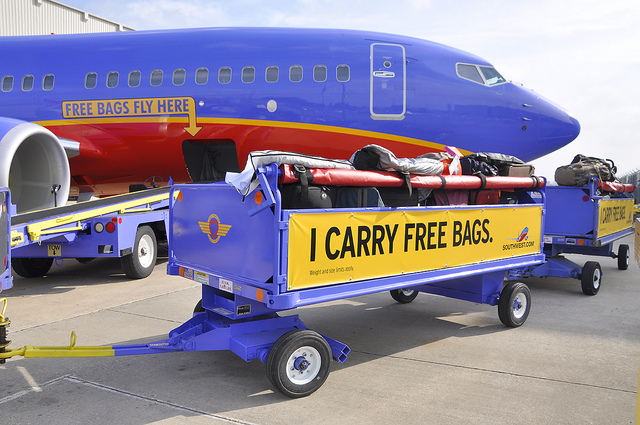
"Bags fly free!" "No change fee!" "No blackout dates, no red tape!"

credit: Businessweek
If you watch television on a regular basis--or travel a lot--you know that these are the common catchphrases of Southwest Airlines, probably America's most popular budget carrier. Many of you have flown Southwest and have your own opinions about them. So now it is finally my turn to weigh in.

I recently returned from my Christmas vacation back in Denver, and I had the opportunity to experience Southwest for myself for the first time. Obviously, I had all the flashy advertisements running in my head, as well as the many comments from my friends and coworkers who have flown with them, but I had to push that all to the back of my mind and go into the whole trip with as clear and unbiased an opinion as possible.

On the day that I flew out of Chicago, I went online to check-in for my flight. I am accustomed to having a reserved seat, so the whole process was a little different for me. At first I was confused as I glanced at the boarding pass. Seating A, position 19. What does that mean? Also, after I printed my boarding pass, there was no button or link to say that I had completed the check-in process. I was sure that if I hit the link that said "return to previous page" that the whole thing would void out and I would have to try again. Yet there was no indication on the previous page that anything was wrong, so I assumed I had done it correctly, though I wish it had been clearer. When I checked the status of my flight--which was scheduled to leave at 6:00 p.m.--the website said there was a 40 minute delay. This was at 8:30 a.m. At first I was irritated that they could predict so early that the flight would be late, so I investigated earlier flight options, but they were all booked. Luckily, I checked back a few hours later and it had changed to a 10 minute delay...much better.

As far as checking bags, that could not have been easier. (It also helped that there were no lines at Midway Airport.) I just went up to the kioks, scanned the barcode on my boarding pass, selected the number of bags I was checking, and the attendant placed the sticker on my suitcase and I was on my way. Less than five minutes, I can handle that.

The boarding process was certainly different. I have flown on airlines that do not have seat assignments, but those were all in Europe--Ryan Air, EasyJet--and the system was pretty unorganized. With Southwest, it was slightly more coordinated, but still a bit of a jumble. I had opted to pay a little extra to make sure I was in the first seating group--which I highly recommend. When they called for seating A, I headed up to the numbered poles that were lined up near the gate. Since there isn't anyone around to make sure people are in the proper order, you have to trust the people around you, and I was pleasantly surprised that no one tried to hop in front of anyone else or claim they had a higher number so they could go ahead. We stood in line for a few minutes, which I didn't mind, but many of my fellow travelers were growing impatient. At this point, we were still scheduled to leave 10 minutes late, but if we boarded fast enough, it could have been sooner. The Southwest employee working at the gate announced that positions 1-30 would be boarding, so we all began filing through the door. A young man ahead of me was a little confused by the process, and was unsure if he was in the right place. The employee was very pushy, urging him along and not answering his questions. I understood he was trying to speed up boarding, but he was definitely a little rude to passengers.

Once on the plane, I grabbed the first aisle seat possible and waited patiently as everyone else boarded. I was impressed with how quickly people got on the plane, tossed their bags up and sat down. I think everyone got on in about 15 minutes, which I had never experienced before. I thought we had a good chance of leaving close to on time, worse case a couple minutes late. However, we ended up sitting at the gate for another 15 minutes. The reason? Our bags. Indeed, boarding was super quick, but it was so efficient that our luggage couldn't keep up, which meant our valiant efforts to leave on time were thwarted.

My flight to Denver had a stop over in Omaha, Nebraska, but I didn't have to switch planes, which was nice. Still, I was worried about how quick the layover would be, since we were already running a little late. Anyone staying in Omaha was quick to depart, which I appreciated, but Southwest needed to switch the flight crew, so that ended up taking a little over half an hour. With a good tale wind and a determined pilot, we landed in Denver exactly when we were supposed to, and once again I was pleasantly surprised. I went from a 40 minute delay to arriving right on time, way to under promise and over deliver.

Waiting for the my luggage was the most annoying part of the whole trip. I must have stood at the carrousel for almost a half hour, and it had taken me at least 15 minutes to walk through the concourse, catch the train and get over to the baggage claim, so in total it took nearly 45 minutes for the bags to even get there.

Even with the layover, the weather and the minor delays, the trip to Denver went pretty smooth, and I was happy to report only a couple setbacks. The return trip to Chicago went even better. There were long lines at DIA for checking bags, but employees at the kiosks were very helpful and they had made sure to staff enough people to keep the line moving. The boarding process, once again, went very quickly, and this time our bags were pretty much on the same schedule. We only sat at the gate for a few minutes before taxiing out. And while the flight was quick and relaxing, what made it most enjoyable was our flight attendant. Our safety demonstration was more than just a tutorial on buckling our seatbelts, but rather a short comedy routine. It definitely lightened the mood a bit, and showed that some Southwest employees really do enjoy their work.

airlinereporter.com
Upon arrival in Chicago, I once again had to wait an exceptionally long time for my bags. It was irritating, but nothing I hadn't experienced with any other airline.

Overall, I would say my journey with Southwest was pretty good. I would give them an average rating of an A-, mostly because the check-in and boarding process can be a bit confusing and hectic, and the long wait for bags was a bit of an issue. Southwest definitely gets points for having an efficient bag check--and no bag fee is certainly a bonus--as well as giving out free snacks on board, a friendly staff and on-time departures and arrivals.

However, I am not a complete convert just yet. Yes, on this particular trip, Southwest had the best fares, but that is not always the case. I have often found other airlines to be cheaper or have better flight times, so I cannot say for sure that I will pick Southwest over another airline in the future based on their benefits. Pricing is always a big factor in my airline decision process. Whoever has the best bid will win my business.

Tuesday, December 20, 2011

The Holiday Cold

It's happened to most of us.

Just as we're closing up shop at the office, packing the last of our essentials in our suitcases, and wrapping those final presents, that dull pain starts creeping into our heads, our thoats feel a little scratchy and our noses just won't stop running. I call it the Holiday Cold. It's what happens when all the stress of the season--final work projects, Christmas shopping, holiday parties--finally sets in just as we are ready to enjoy the holiday.

My flight back home to Denver is tomorrow afternoon, and wouldn't you know it, my head has been pounding all day and my nose is getting more stuffed by the minute. It doesn't help that I will soon be wandering through a crowded airport where I will eventually board a packed plane filled with germy travelers. It's a fact that planes can actually make people sick, so if a cold is lingering before you fly, chances are it will be a full blown illness when you arrive at your destination.

People who travel a lot have higher rates of infection, with one study saying there is an increased risk as high as 20%. There is a common belief that recirculated air is the main cause, but illnesses are more likely to spread when air circulation is shut off. So when people are boarding or exiting the plane is actually when they are most prone to getting sick. Since the air in planes is very dry, it is a prime environment to spread disease, since viruses tend to thrive in low-humidity. High altitude can also make people tired, and fatigue makes them susceptible to colds. With all these factors working against you, it seems inevitable that you will catch some type of cold, whether mild or severe. So how do you avoid the Holiday Cold and actually enjoy your time with the family?


Follow a couple simple precautions, and you should be able to stave off that pesky cough.

credit: health.com
First, hydrate, because drinking water and keeping nasal passages open and moist can help reduce the risk of a cold. Second, keep your hands clean. Keep sanitizer nearby and squeeze a bit on your hands after you come in contact with any surface that could be contaminated with germs--tray tables, seat pockets, etc. Third, open your air vent so that the stream of air passes right in front of your face, this will help direct airborne germs away from you. Fourth, if you end up sitting next to someone who is sick, request to change seats. With this holiday season expected to be super busy, and most planes filled to capacity, this might not be possible, but it's worth a shot for your health's sake. Finally, avoid pillows and blankets, since this is a veritable breeding ground for germs.
 
For me, I always carry a couple packets of Emergen-C in my bag. I down one with a full glass of water before entering the airport, and then take another while in flight. Some people are skeptical about whether it actually helps you fight a cold, and, trust me, I'm wary of that, too. However, I do believe that it can boost your immune system to help fight off the possibility of a cold. I also take a multivitamin and plenty of zinc before traveling. Water and tea are always my beverages of choice, and I try my best to not get too stressed, since that can lower your defenses even more.

credit: lindtusa.com
The Holiday Cold can be a downer, especially if it hits when you're traveling. Taking the proper steps can keep you healthy and happy this holiday season. And you do happen to catch a little bug, remember that this is the time of year for giving, and your family and friends will certainly come with the rescue with hot chicken soup, warm cocoa and lots of soft blankets. Who wouldn't love that?
 

Thursday, December 1, 2011

Trimming the Tree

Today is the first day of December, and in celebration of the holiday season, my roommate and I are planning to "deck the halls"--or our apartment--with a bunch of Christmas decorations, including the staple of the season: The Christmas Tree.

Trimming the tree has been a cherished tradition in our culture for hundreds of years, but the history of this act dates back decades before our country even existed. There are numerous accounts of how the Christmas tree tradition came to be, but most historians can agree that it goes back to the early Romans. In the Northern hemisphere, the longest night of the year--also known as the winter solstice--occurs around December 21. Romans celebrated this time with a feast called the Saturnalia, in honor of Saturn, the god of agriculture. Since the solstice meant that farms and orchards would be green again soon, the Romans decorated their homes with evergreen boughs. They would exchange gifts, giving coins for prosperity, pastries for happiness, and lamps to light one's journey through life.

Years later, Germans and Scandinavians put evergreen trees in their homes or just outside their doors to represent their hope for the upcoming spring. This tradition helped us evolve our current practices with trees indoors and wreaths hung in entryways. Germany is largely credited with launching the Christmas tree tradition as we know it. It is widely believed that Martin Luther was the first to actually decorate a tree with lighted candles to recapture the scene he witnessed of stars twinkling through the branches of the evergreens.

In the United States, the tree most likely came from Hessian troops during the American Revolution, or with German immigrants in Pennsylvania. One of the first accounts of a tree in the U.S. was in the 1830s, when settlers in Pennsylvania displayed them in their hopes. However, many Americans saw the trees as pagan symbols and they were not accepted at first. It was only after an image was printed of Queen Victoria and her prince, Albert, standing with their children around a Christmas tree that it suddenly became fashionable.

 Christmas ornaments began arriving in America in the 1890s, when tree decorating was growing rapidly in popularity. True to form, Americans took to putting up massive trees that reached from floor to ceiling, while the Europeans continued to use small trees about four feet high. (But we always like things bigger here.) Many people made their own homemade ornaments using wood and cloth, while others used apples, nuts and marzipan cookies. Popcorn came into use after being dyed bright colors and interlaced with berries.

Today, our ornaments and decorations are much more elaborate, which is to be expected. And we have all taken on our own Christmas decorating traditions. And just as every family is different, so is every country. It is interesting to hear about what other cultures do to celebrate Christmas, and how they trim their trees.

Christmas trees around the world. Credit: family-christmas-traditions.com
In the Phillipines, much of the population is too poor to afford Christmas trees, so they must rely on their own creativity to make a tree. They will often use bamboo, branches or other materials to build an artistic rendition of the typical evergreen. They will then decorate them with star lanterns and other handmade ornaments. In Liberia, the Christmas tree is an oil palm tree that they decoate with bells. In the northern part of Brazil, where pine trees are rare, most will buy artificial trees in a variety of colors. In the south, where there are millions of trees, people will decorate them with puffs of cotton to imitate snow. The Japanese do not really celebrate Christmas, but those who do decorate their trees with small toys, dolls, paper ornaments, gold fans, lanterns and tiny candles. Since Christmas falls during the summer in South Africa, many do not have trees, but they will decorate their windows with sparkling cotton, wool and tinsel. The same is true in Australia, and many will celebrate on the beach or with a backyard barbecue. Mnay Aussies will decorate Christmas bushes, native plants with red-flowered leaves.

While my family has adopted many Italian traditions, we have yet to embrace the ceppo, a triangular shelf that is set up in the room. On the lower shelf sits the nativity, the upper shelves are decorated with small gifts, fruits, and candies. Candles can be affixed to the sides and a star is placed on top. This is called the "tree of lights." Maybe I can convince my parents to do it this year, though after 25 years of doing the exact same thing, I think we all might be reluctant to introduce something new.

But I am excited to trim my tree tonight, and perhaps start some of my own traditions.