Pages

Showing posts with label trains. Show all posts

Wednesday, January 26, 2011

Is Flying Just Another Form of Public Transportation?

Courtesy of Wellcultured.com
Sure, flying is a way to get a group of people from one place to another, but can you really lump it into the "public transportation" category? According to an article from Travel + Leisure, the days of fancy air travel, well-dressed patrons and prim-and-proper stewardesses are long gone; replaced with cramped seats, low-budget service and socially detached airline personnel. Even though traveling by plane is no longer the elegant event it used to be, I could never classify it the same way as buses, trains and subways. But let's face it, that may be where it's heading, just one more way to get from point A to point B, without any style, flare or social interaction. I mean, isn't that what happened to train travel in this country?

Santa Fe 3751 Excursion
From flickr, by mark_v_socal
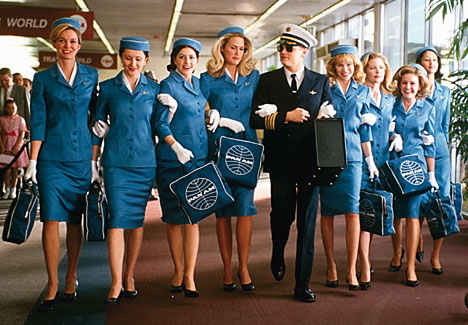
Back in the glory days of the locomotive, train cars were outfitted with velvet chairs, white-linen table cloths, immaculate chandeliers, specially carved bars and actual beds. Now, the bar car is a bland box of linoleum, seats face only two directions, tables are attached to the walls, and beds fold down like ironing boards. And what about the train conductors with their three-piece suits, golden stop watches and whistles screaming "all aboard?" They're gone, too. Such is the world of the airplane. Back in the early 40s, planes also had that chic decor and swanky clientele, and a flight was a real enjoyable travel experience. Stewardesses, also referred to as "fly girls," served champagne and full-fledged meals, all while dressed in alluring outfits and adorable hats. Not only did stewardesses wear different clothes than the flight attendants of today, but their dedication to serving the customer was something to be admired. They went out of their way to make sure passengers were comfortable, had everything they wanted and got to their destinations with little to no complaints. They even had conversations with passengers, getting to know the stylish businessmen who were jetting off to their next meeting. Today, it seems like flight attendants just want to get passengers boarded, seated and quiet, and then just as quickly get them off the plane. There's no more panache to air travel.

I find this revelation to be rather sad, because I truly enjoy flying. I love knowing that I am going to be on a plane, traveling somewhere different, or perhaps someplace familiar--it all depends on my travel plans. But the fact is, I still get excited to board a plane, to watch the airport grow smaller as we ascend into the air, to feel the drop in my stomach as the wheels go up and the plane is floating. I still think of it as something special. And yet I know there are few who feel the way I do about having to fly. They look at it as a chore, an obligation to get them to their destination. It's uncomfortable, frustrating, expensive, and they just want it over with as soon as possible. So what can be done?

Virgin America Airbus A320-214
From Flickr, by mark_v_socal
I was discussing this issue with my boyfriend, and he shrewdly observed that airlines need to use this in their favor to gain more business. Then he mentioned Virgin America's plan to make flying a more enjoyable experience for passengers, and it stirred my curiosity. In a recent article from Bloomberg Businessweek, Virgin America's unconventional ways were put to the test to see how they could fare in this competitive industry. Founder and CEO of Virgin Group, Richard Branson, made a remark to employees and press as the first Virgin America flight came into Dallas-Fort Worth Airport: "You can either go on that other carrier and get their kind of service...or you can come on the Virgin carrier and have a blast." The airline has a philosophy known as fun in the skies, and it has shown promise in the last three years. Their Airbus A319 and A320 feature entertainment in every seat-back and have free Wi-Fi internet access. Even though competition is tough and the airline has had its fair share of struggles, Branson believes it has something truly special to offer customers: great service. He says that other airlines do not think of the passengers at all, it's become like a bus service. (Sounds familiar, right?) So Branson has dedicated most of his efforts to improving customer service and design. When they ordered their first line of planes, Virgin wanted to equip them with leather seating, translucent barriers between sections so as to reduce that claustrophobic feel, touchscreen entertainment systems that let passengers select movies and shows on command, and the ability to have food and drinks ordered from the seats whenever it was desired. LED-lighting would also be installed in the cabins to improve ambiance and overall mood.

While these amenities certainly bring back some memories of the early days of air travel when passengers were excited about flying and truly enjoyed their experience on planes, it does not mean that Virgin America will prosper, especially with other airlines doing their best to make sure it fails. But if Virgin's ways cannot get them to the top of the airline industry, they are at least pushing other airlines to instill some of these concepts on their planes. In fact, Delta and United are already starting to install Wi-Fi on their flights, Continental is looking into satellite television and mood-lighting is being put into many of Boeing's new models.

Even if the days of stewardesses, smartly dressed business men, luxury seating and impeccable service are long gone, there is still hope that air travel will not lose its cache. And if airlines like Virgin America continue to keep the passenger as their main focus, we might be welcoming a whole new era of air travel, where--hopefully--the champagne will be flowing.

Thursday, December 16, 2010

Exploring Bulgaria's Cultural Richness

Bulgaria has been a member of the European Union since 2007, but it wasn't until this week that Eurail added it to its network of travel destinations. The 2011 Global Eurail Pass will allow travelers to access the Eastern European country through the Bulgarian State Railways. Representatives of the Eurail Group are eager to expand their reach and tap into the tourism sector that has been consistently growing over the last decade. Visitors can now explore the ever increasing allure of Eastern Europe through Bulgaria's train system, taking in the vast culture and sprawling landscape of the "Country of Roses."

With a history that dates back all the way to the first antiquity--that's the 1st millenium BC, to put it in perspective--the Bulgarians have had a major role in cultural development, philosophy, agriculture, language and social structure. After spending years under foreign rule, including Alexander the Great and the Romans, Bulgaria established its first empire. It grew significantly as a military power, introduced the first code of law, created the Cyrillic Alphabet and grew into a strong Christian country. The empire slowed due to numerous wars, eventually falling and being conquered by the Byzantine Empire in 1018. It was not until 1185 that Bulgaria had an uprising and succeeded in reestablishing their empire. The Ottomans would eventually seize power over the Bulgarians, and the population suffered from oppression and misgovernment under the Turks. As a result, their culture became separated from the rest of Europe. Throughout five centuries of Ottoman rule, the Bulgarians attempted many revolts, and were finally successful with the Russo-Turkish War of 1877-78. Bulgaria was proclaimed an independent state in 1908. After that, Bulgaria began to takes steps to reconnect with Western Europe. Communism was still the main form of government up until the late nineties, early two-thousands, but now Bulgaria is seen as "free."

With the fall of communism and an increased desire to promote tourism, Bulgaria has slowly become a must-see destination in Eastern Europe. And with just one glance at the country's landscape, it's understandable why. The geographic diversity of Bulgaria allows tourists to see snow-capped peaks, beautiful beaches and sprawling plains all in one country. Not only is the natural environment appealing, but the ancient buildings, intricate architecture and traditional sites have drawn millions to Bulgaria's borders. The Thracian, Slavic and Bulgar influences can be seen through collected artifacts, and some of the most iconic pieces include the Thracian treasures, intricately crafted objects that were buried both to hide them during controversial times and for ceremonial purposes. The more famous excavations of these ornate gold and silver items are the Panagyurishte gold treasure (on display at the National Museum of History in Sofia),the Rogozan treasure (known as the find of the century with over 165 pieces discovered) and the Valchitran gold treasure (shown at the National Archeological Museum in Sofia).

Visitors to Bulgaria are fascinated by the county's ancient ancestors, so it's understandable that the many immaculate tombs on display are some of the most popular attractions. Kazanluk, referred to as the valley of the roses, became extremely popular when new tombs were discovered there in the nineties. The Sveshtari Tomb, arguably one of the finest tombs discovered in Bulgaria, dates back to the 3rd century BC and appears to be the resting place of a Thracian ruler. Thracian Tomb tours are available through BG Travel, and consist of a 5-day package of all the best tombs in the country.

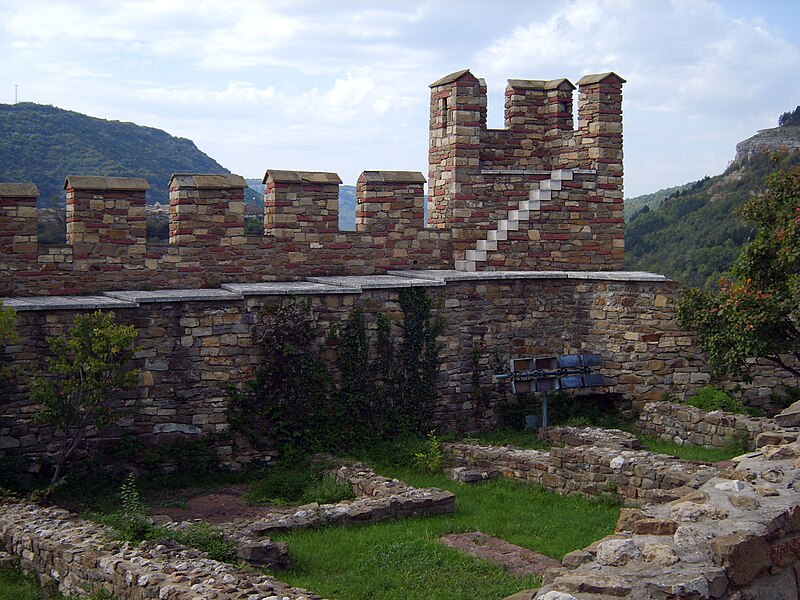
Bulgaria ranks third--behind Greece and Italy--in number of archeological and historical monuments. Apart from the tombs, Bulgaria is full of crumbling fortress walls and forums, temples, amphitheaters, stadiums and monuments. Among these locations is Tsarevets, a medieval stronghold in northern Bulgaria that served as the primary fortress during the second empire. Another noteworthy site is Ledenika, a cave in the Balkan Mountains. The cave contains 10 separate halls, the largest being the concert hall accessible only through the Passage of Sinners, designated only for those whose heart is pure. If you dip your hand into the ice-cold water of the small pool in the cave, known as the Lake of Wishes, and make a wish, that wish is sure to come true. In an effort to promote tourism to these sites and many others, the country created a booklet called "100 Tourist Sites of Bulgaria." It can be purchased at any tourist union center and costs 1 lev (or 0.67 cents).

Bulgarian cuisine is extremely diverse thanks to the warm climate and rich soil. Every meal is served with a salad, which, more often than not, is made with a Bulgarian White Brine Cheese called Sirene. Most dishes are oven baked, steamed or stewed--fried is not an option--and any kind of meat is grilled. Pork dominates Bulgarian food, but many other meat varieties can be found in popular dishes, like Gyuvetch (a beef and vegetable stew). The Bulgarians are known to create quality dairy products, including yogurt, which is said to have originated in Bulgaria. Tourists should not miss out on a traditional pastry called Banitsa, made by layering whisked eggs, sirene cheese and filo pastry and then baking it. As far as drinks go, natives usually turn to Bulgarian Wine to accompany their meals--such as Mavrud, Muscat and Gamza--but Rakia, a fruity liquor, and Mastika are popular options, too.

With all that Bulgaria has to offer, it's difficult to know where to start. I recommend beginning your journey with a few days spent in the capital city of Sofia. Located in western Bulgaria, at the foot of Vitosha Mountain, Sofia sits quaintly in a large valley, surrounded by mountains. Among the city's attractions are the National Historic Museum, The Museum of Earth and Men, the Sofia City Art Gallery, the Sofia Zoological Garden, Boyana Church, and much more. You can relax in one of the public mineral baths or catch a soccer game at Vasil Levski National Stadium. There is plenty to keep you occupied during the day, and even more to do at night. Sofia has an exciting nightlife with plenty pf clubs, pubs, restaurants and mehani--traditional Bulgarian taverns. With Sofia's well-developed bus, tram and trolleycar transportation system, it's easy to get from place to place. The underground still needs work, so it's best to rely on walking or other means of transport. After experiencing Bulgaria's capitol, feel free to venture wherever you want. No matter if you head up into the mountains to ski or out to the beaches to lay in the sun, Bulgaria provides you with a truly great getaway.

So when you're planning your next big trip abroad, and Europe seems like a top contender on your destination list, think about taking advantage of Eurail's passes and taking a relaxing train ride to Bulgaria. You certainly won't be disappointed with this cultural gem.
Friday, November 12, 2010

Holiday Travel....

...Have you booked your flight yet?

Every year when November first hits and the Christmas music comes on the radio, the initial thought in my head is...where am I going to be for Christmas? I'm usually at home for Christmas, back with the family in good 'ol Denver, Colorado. While I never had to travel home for the holidays before, now I live far enough away that I have to plan my trip well in advance in order to get my vacation days approved and my flights booked. Many people have to go through the same process as me, while others can simply drive or take trains home and still others avoid home all together and opt for a holiday vacation.

Holiday travel can be hectic, and this time of year spurs some of the largest airport crowds ever. It can be tough to find decently priced airfare, or even good dates to fly. Blackout dates plague those trying to use mileage and horrible weather can ground planes for hours, making it impossible to get home on time. I'm sure there are plenty of people out there who have spent a Christmas Eve or Day stranded at an airport. For all those who find themselves traveling during the holidays, airlines are providing a little relief from the stress. Many major airlines announced reduced holiday prices this week, dropping some costs down by 35%. So if you still haven't purchased your tickets for Thanksgiving, Christmas and New Years, check out travelzoo to find out the cheapest days to fly, and get some helpful tips from some travel experts.

As far as those people who do not have to fly, train travel is certainly an untapped resource for many travelers. This year, Amtrak reported it's on track for a record number of passengers for the fiscal year, which makes sense since train fares are significantly cheaper than airline tickets. Prices for train tickets are relatively consistent, with the possibility of slight peaks during high travel periods, but even with that spike, it's a much more economical choice. The only set back to the train is the length of travel time. Planes, obviously, get you to your destination quicker. So if you have a long distance to go, stick with planes. If you are not traveling across the country, but rather somewhere close, like the next state over, a train might be your best option. It's cheap, convenient, with plenty of space for your bags, and you get to enjoy some lovely scenery along the way.

If you choose to drive to your holiday destination, be sure to check road conditions and traffic. While airports can be packed, so can highways, so it might take you longer than expected to get home. Another important thing to keep in mind is gas prices. Now that the Federal Reserve is trying to stimulate the economy by buying bonds, gas prices will inevitably rise. The good news for drivers is that with rising gas prices, airfares will increase. Cars are still the cheaper alternative.

Whether going by train, plane or automobile, the holidays will always be a crazy time to travel. Just remember what is waiting for you when you finally arrive...

Monday, April 19, 2010

Welcome Help for Travelers Affected by Volcano

Unless you've been living in a hole the last week, you're probably aware of the immense amount of ash and smoke billowing from a volcano in Iceland holding up air travel. As I was reading through travel articles today, I noticed a fellow travel enthusiast had posted this on her twitter account:

http://bit.ly/cfU7Gq

While it won't help all the stranded passengers, all the ones traveling around Europe will surely appreciate the alternative transportation. Personally, I find it encouraging that Eurostar would pull their resources and offer to help.

I realize this is a short post, but I found this article interesting, and I thought others would too.